Summary: Understanding core ryokan room design terms—tatami, shoji, fusuma, tokonoma, engawa, and onsen layouts—helps you read floor plans and photos like a design critic, so you can book a traditional Japanese room that truly matches your taste.
Why ryokan room design terms matter when you book
When you stay in a ryokan, the room is not just accommodation. It is a carefully choreographed traditional Japanese space where every line, material, and proportion shapes your experience of Japan. Learning core ryokan room design terms lets you read floor plans and photos with the same precision that architects and interior designers use.
Luxury ryokans describe each guest room with phrases like tatami room, Japanese style, or Japanese western, yet many international guests skim past these words. If you understand how a tatami mat defines scale, how shoji sliding panels filter light, and how a sliding door frames the garden, you can choose rooms that match your own minimalist aesthetics. This design literacy turns a simple decision to stay at a ryokan into a curated traditional Japanese experience rather than a blind booking.
Across Japan there are tens of thousands of ryokans, from intimate onsen ryokan hideaways to larger properties with many rooms in a Japanese layout. Some ryokan rooms lean toward pure Japanese style with futon on tatami mats, while others offer a western style bed in a hybrid style room. Knowing the vocabulary behind these rooms helps you read between the lines of every description and understand what kind of baths, views, and materials you are actually paying for when you reserve a specific room type.
Tatami, shoji, fusuma and the grammar of the room
Tatami is the base unit of ryokan architecture, and every tatami mat quietly dictates how you move, sit, and sleep. A standard full tatami in many regions measures roughly 90 by 180 centimeters, although sizes vary slightly by area, so a six tatami room feels intimate, while eight tatami mats or more create generous rooms Japanese travelers associate with celebratory gatherings. When a property lists a tatami room size, you can immediately picture the real volume of the space instead of guessing from wide angle photos.

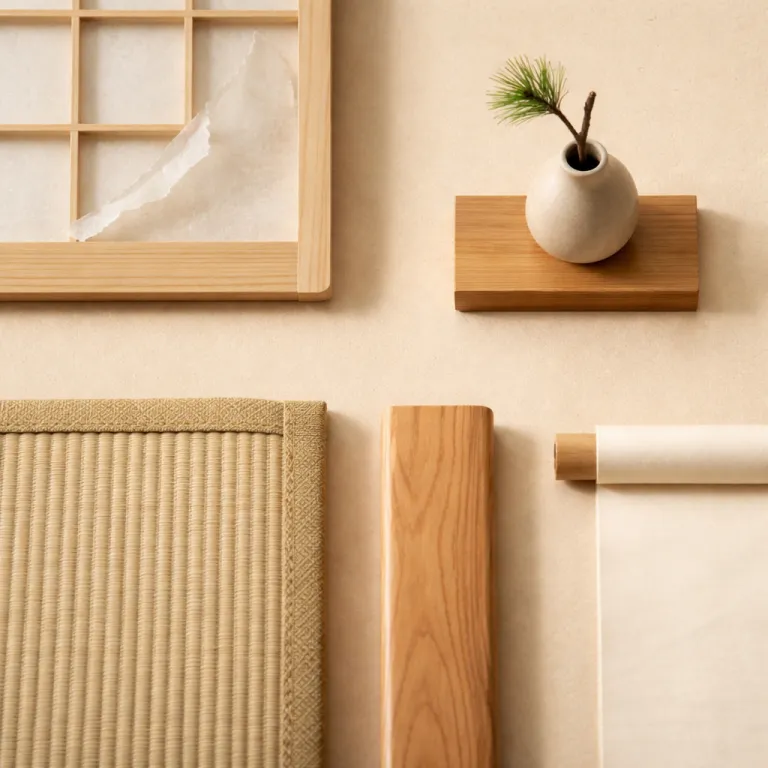
Look closely at shoji and fusuma in any Japanese style guest room, because these sliding doors reveal both craftsmanship and cost cutting. Shoji sliding screens, made from wooden lattice and washi paper, soften hot afternoon light into a milky glow that defines traditional Japanese calm. Fusuma, the opaque sliding door panels between rooms, should glide silently and align perfectly, otherwise even a luxury onsen ryokan can feel oddly flimsy and less refined than its photos suggest.
Minimalist ryokan design depends on how these elements meet rather than on decoration. In a strong style room, the junction between tatami, timber sill, and shoji track is crisp, with no plastic trims or fake wood patterns. When you read that a ryokan uses natural tatami mats and solid cedar frames for each sliding door, you can trust that the rest of the Japanese culture details have been considered with equal care, from the low table to the alcove display.
Tokonoma, engawa and the quiet power of negative space
The tokonoma, a shallow alcove in a traditional Japanese room, is the single most revealing detail in any ryokan. Serious ryokans treat this space as a seasonal micro gallery, with one hanging scroll and a single object placed on the raised floor, never cluttered. When you stay at a ryokan in a higher end property, the tokonoma often becomes the visual anchor of the guest room, balancing the futon area and framing the view.
Engawa, the narrow veranda like strip between interior tatami and garden, is where minimalist aesthetics meet Japanese culture at its most contemplative. In a well designed style room, the engawa floor may shift from tatami to smooth timber, inviting you to sit, read quietly, and feel the change in air as you slide open the shoji sliding panels. This threshold is especially powerful in onsen ryokan suites with open air baths, where the engawa becomes your private path from room to hot spring water.
Pay attention to how much empty space surrounds the tokonoma and engawa, because luxury in Japan is often measured in uncluttered meters rather than in objects. A guest room that allows the futon, low table, and mats to breathe will feel calmer than larger rooms packed with western style furniture. When a property highlights its traditional tokonoma and deep engawa in the room description, you can expect a more thoughtful, less generic interpretation of Japanese style and a more immersive traditional Japanese room layout.
Onsen, hot spring baths and the minimalist bathing ritual
For many travelers, the real reason to book a ryokan is the onsen, the natural hot spring baths that define rural Japan. A refined onsen ryokan will describe not only the temperature of the hot spring water but also whether your guest room includes a private bath, an open air tub, or access to shared spring baths. When you read these details carefully, you can decide whether you want a quiet open air bath on your balcony or the social rhythm of larger indoor baths.
Minimalist bathing design is about framing the elements rather than adding decoration. In the best rooms Japanese architects specify hinoki or cedar for the bath, stone for the floor, and shoji or a sliding door to control views toward the garden or mountains. The contrast between the hot water, cool air, and simple materials creates a traditional experience that feels more luxurious than any amount of chrome hardware or decorative clutter.
Some Japanese western suites pair a western style bed with a semi open air bath, giving you the comfort of a mattress and the ritual of onsen in one style room. Others keep the bathing strictly communal, with no private baths in the guest room, which can be ideal if you want to immerse yourself in shared Japanese culture. When a ryokan lists both indoor baths and outdoor hot spring pools, consider how you personally like to bathe before you stay at a ryokan, because the layout will shape your entire evening and even how you schedule dinner and breakfast.
Reading modern minimalist ryokans like a design critic
Contemporary ryokans, especially design forward brands, reinterpret traditional Japanese vocabulary while keeping the underlying grammar intact. You will see tatami mats paired with low western style sofas, or a futon folded away to reveal a clean lined work table for remote travelers. The key is whether the room still respects the proportions of a tatami room and the sliding doors, or whether it simply decorates a generic box with Japanese motifs.
When you browse a luxury booking website, read the room captions as closely as the photos. Phrases like Japanese style room, Japanese western hybrid, or western style suite signal very different experiences of sleeping, sitting, and bathing. A strong property will specify tatami mat counts, shoji sliding partitions, and whether fusuma separate the guest room from the dining area, while weaker listings hide behind vague adjectives and stock phrases.
Material choices are the quietest indicator of quality in any ryokan room. Solid timber, real tatami, and paper shoji age gracefully, while vinyl mats and plastic sliding door frames feel tired within a few seasons. When you compare reviews of an onsen ryokan such as Hanamurasaki in Yamanaka Onsen, which blends tradition and modern art, or Gora Kadan in Hakone, which reuses a former imperial villa, with more generic ryokans, you will notice how often guests mention the feel of the floors, the sound of the doors, and the calm of the baths as the essence of their stay, even when they describe similar room sizes.
How to use ryokan room design terms when you book
Before you reserve, list the non negotiables for your own minimalist aesthetics. Decide whether you want to sleep on a futon in a pure tatami room, or whether a Japanese western layout with a bed and low seating better suits your body. Then read each room description line by line, matching terms like tatami mats, shoji, and open air bath to your priorities and searching for phrases such as Japanese style room with private onsen or tatami room with garden view.
When you contact a ryokan, ask specific questions using the same vocabulary that appears on the website. You might ask whether the guest room has shoji sliding panels facing the garden, whether the hot spring baths are truly open air, or whether fusuma separate the sleeping and dining areas. Staff, from the front desk to your assigned Nakai san, are used to explaining these traditional Japanese details and will often send extra photos of the room layout or confirm exact tatami counts if you request them.
Remember that a ryokan is not just a place to sleep but a complete cultural experience shaped by architecture, service, and ritual. As one definition puts it, “A ryokan is a traditional Japanese inn offering cultural experiences.” When you stay at a ryokan with this design vocabulary in mind, you will notice how every sliding door, every bath, and every strip of engawa quietly teaches you more about Japan than any guidebook ever could.
FAQ
What is a ryokan and how is its room different from a hotel room ?
A ryokan is a traditional Japanese inn offering cultural experiences, with rooms organized around tatami mats, sliding doors, and low furniture rather than carpets and high beds. You usually sleep on a futon laid directly on tatami, and shoji or fusuma panels divide the guest room instead of solid walls. This layout creates a flexible space that shifts between living, dining, and sleeping throughout the day.
How do I choose between a Japanese style room and a Japanese western room ?
A Japanese style room usually means full tatami flooring, futon bedding, and traditional low seating. A Japanese western room combines tatami or Japanese accents with a western style bed, which can be more comfortable if you are not used to sleeping on the floor. When you read descriptions, check whether the bath, seating area, and beds match how you like to relax.
Do all ryokans have private baths in the guest rooms ?
Not every ryokan offers private baths in each guest room, because many rely on shared hot spring baths as the main attraction. Some luxury properties add open air tubs or indoor baths to selected suites, often described clearly in the room name. If private bathing is important, look for phrases like private onsen, open air bath, or in room hot spring when you book.
What etiquette should I follow in a traditional Japanese room ?
You remove shoes at the entrance and never step on tatami mats with outdoor footwear. Yukata robes provided in the room are worn around the property, including to meals and baths, which keeps the atmosphere relaxed. In shared onsen areas, you wash thoroughly before entering the hot water and keep towels out of the bath itself.
Are meals usually included when I stay in a ryokan ?
Most ryokans include both dinner and breakfast in the room rate, often served in your guest room or in a private dining space. The meals showcase regional Japanese cuisine and are considered a central part of the overall experience. When comparing options, confirm whether your chosen style room includes half board or if meals are optional add ons.