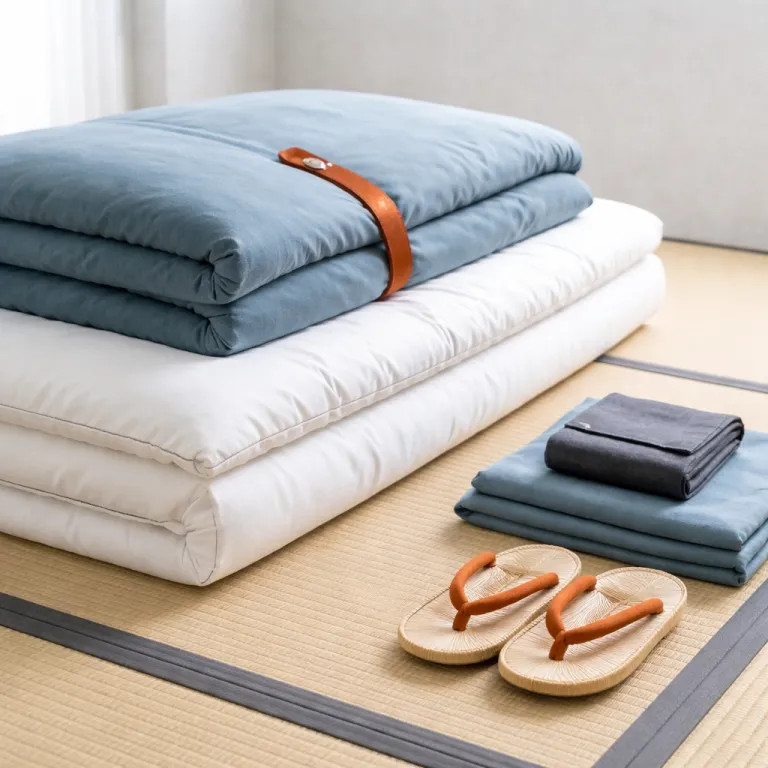
Ryokan futon turndown service: the quiet ritual that defines your stay
Why the ryokan futon turndown service defines your stay
The quiet choreography of a traditional ryokan futon turndown service tells you more about a Japanese inn than any glossy brochure ever will. Within the first evening of your trip to Japan, the way staff transform a minimalist tatami room after dinner reveals how seriously the property treats classic Japanese hospitality and how much it wants you to feel personally looked after. For a solo explorer planning a ryokan stay during a longer journey, learning to read this ritual turns a simple night’s sleep into one of the most revealing parts of the entire itinerary.
In most long‑established inns across Japan, the futon ceremony happens while you are at a multi‑course kaiseki dinner or soaking in the onsen baths, so the room remains a private sanctuary rather than a stage. The ryokan staff enter with practiced discretion, slide the doors closed behind them and begin preparing the tatami mats with a precision that has been refined over generations of traditional ryokan service. This is not generic hotel housekeeping; it is a codified experience designed to balance comfort, aesthetics and the flow of your stay from tea ceremony to hot springs to sleep.
Guidance from the Japan Ryokan & Hotel Association notes that evening futon setup remains a standard expectation at member properties, which means that on almost any classic itinerary you can anticipate this ritual framing your night. That widespread practice also creates a useful benchmark when you check property descriptions on a luxury booking website and compare rooms, because a missing turndown service often signals a more modern, hotel‑like approach. When a Japanese ryokan keeps the full ceremony, from folded yukata robes to carefully stacked futons, you can usually expect a more immersive traditional experience in the baths, the garden and even at breakfast served in your room.
Step by step inside a traditional futon ceremony
A proper ryokan futon turndown service begins long before you see the bed, with the way the tatami mats are maintained and the room is cleared after tea. Once you leave for the ryokan onsen or the open‑air hot spring, staff move quickly to remove the low dining table, tuck away zabuton cushions and reset the space so the proportions of the room feel balanced. The best properties time this so that by the time you return from the baths, the transformation feels effortless and your private retreat seems to have expanded.
First, the staff check the tatami mats for alignment, then unroll a protective underlay that keeps the futon from slipping and preserves the straw weave over time. Next comes the futon mattress itself, usually drawn from a neat stack stored in a closet behind sliding doors, with higher‑end ryokans layering two mattresses for extra depth and warmth during a winter stay. Pillows follow in a deliberate sequence, often offering both buckwheat and feather options, and this is where a discerning guest can read the property’s priorities in comfort, allergy awareness and the overall experience.
Once the base is set, a thick duvet is smoothed over the futon, corners tucked with hotel‑like precision but a softer, more organic line that suits a traditional ryokan aesthetic. Yukata robes are folded either at the futon’s edge or on a nearby low bench, sometimes paired with tabi socks, and this small detail can make you feel special in a way no generic hotel amenity ever does. Finally, staff adjust the shoji or glass panels to frame the best possible view of the garden, courtyard or distant mountains, so that when you wake you see not a generic room but a curated slice of Japan.
Signals of quality: what to notice when you return to your room
When you step back through the sliding doors after the onsen, pause before you rush to the futon and let your eyes adjust to the new layout of the room. Look first at spacing; in a well‑considered ryokan stay, the futon will sit so you can sit up and enjoy the view without feeling cramped, with enough room to move around in yukata robes without brushing against walls. If you booked a private onsen or open‑air bath on the terrace, the alignment between futon, window and baths should feel intentional, almost like a stage set designed for one.
Next, pay attention to materials and layering, because these are where a Japanese ryokan quietly communicates its category and ambition. High‑thread‑count cotton, natural fillings and futon thickness all speak to investment in guest comfort over the long durée, while thin or synthetic bedding can suggest a property that leans more toward hotel cost control than deep traditional hospitality. The way breakfast served in the room is staged the next morning, with trays placed where the futon once lay, continues this choreography and shows whether the staff think in terms of a full narrative arc for your entire trip.
Silence is another signal; a refined ryokan futon turndown service leaves no trace of haste, no scuff marks on tatami mats, no lingering scent of cleaning products, only the faint aroma of straw and hot spring minerals from the baths. If you happen to be in the room and politely step to the side while staff work, you will notice minimal conversation, efficient movements and a calm focus that feels closer to a tea ceremony than to hotel housekeeping. These are the properties many travelers end up recommending most strongly, because they understand that service is not performance but a quiet, consistent practice that stays with you long after the trip.
For quick reference, many experienced guests mentally run through a short checklist when they re‑enter the room: spacing and futon placement, quality of linens and pillows, neatness of folds, how the view is framed, and whether the atmosphere feels calm and refreshed rather than hurried.
Modern interpretations, family rooms and when the ritual disappears
Not every ryokan in Japan maintains the full live turndown service, and understanding the variations helps you choose the right stay for your style of trip. Larger, design‑forward properties sometimes pre‑make futons before check‑in, especially in family rooms where multiple futons fill most of the floor and staff would otherwise need to re‑enter late in the evening. This approach can suit travelers who prefer a more predictable hotel rhythm, but it does remove the small moment of theatre that defines a classic ryokan futon turndown service.
In some modern Japanese ryokan concepts, particularly those with Western beds in a portion of the rooms, the futon ceremony is reserved for premium suites or for guests who explicitly request a traditional tatami layout. Solo travelers often find that smaller rooms still receive the full ritual, while larger suites with private onsen baths may have futons left partially prepared so staff do not intrude on couples enjoying the hot springs late at night. When you browse a luxury booking website, look closely at room descriptions and photos; if you see permanent beds on raised platforms rather than futons on tatami mats, the turndown service will likely feel closer to a standard hotel experience.
There are also edge cases where properties have dropped the ritual entirely, especially in urban locations where space is tight and turnover time between stays is short. In these cases, the ryokan onsen, the multi‑course dinner and the garden view may still be excellent, but the absence of a futon ceremony changes the emotional temperature of the stay. For travelers who care deeply about traditional Japanese service choreography, it is worth prioritizing properties that explicitly mention futons, tatami rooms and evening turndown when you plan your next trip to Japan.
How to engage with the turndown ritual and book wisely
As a guest, the most respectful way to experience a ryokan futon turndown service is to let the staff handle every step of the process. The Japan Ryokan & Hotel Association is explicit on this point in its guidance to international travelers: “Allow staff to handle futon setup” and “Do not attempt to set up futons yourself,” and this advice reflects both safety considerations and respect for the craft that underpins traditional Japanese housekeeping.
When you check in, the front desk will usually explain the timing of dinner, baths and turndown service, and this is the moment to mention any preferences about pillows or the number of futons in the room. If you are a light sleeper, ask whether the futon can be placed slightly away from the corridor wall, or whether a quieter room with a garden view is available, because these small adjustments can transform a single night into the highlight of your entire trip. Solo travelers who value privacy can also request that staff come while they are in the onsen or hot spring, so the room feels untouched by other people’s presence when they return.
When choosing where to book, read between the lines of property descriptions on curated platforms such as specialist ryokan stay guides and pay attention to how they describe rooms, baths and service. A listing that talks in detail about tatami mats, sliding doors, yukata robes and the flow from tea ceremony to multi‑course dinner to onsen usually signals a property that treats turndown as a central ritual rather than an afterthought. For a deeper sense of how this plays out in practice, long‑form reviews of specific properties, such as a detailed ryokan review of Izuyasu Ryokan in Kyoto by experienced Japan travelers, can help you calibrate expectations before you commit to a particular room or private onsen category.
Reading your own experience and remembering it after the trip
Once you have slept on a well‑prepared futon, the memory of that first night often becomes the reference point for every later ryokan stay. You will remember the feel of the tatami mats under bare feet, the weight of the duvet after stepping in from the open‑air baths and the way the room seemed to inhale and exhale as staff moved furniture between dinner and sleep. On a longer trip to Japan, these sensory anchors help distinguish one Japanese ryokan from another far more clearly than lobby design or hotel branding ever could.
After you leave, notice which details stay with you; was it the way the yukata robes were folded at the futon’s edge, the exact angle of the futon facing the garden, or the quiet efficiency of the staff as they reset the room in the morning? Many travelers report that the moment they slid open the doors after the onsen and saw the futon laid out was when they truly began to feel special, as if the entire service choreography of baths, dinner and breakfast served in the room had been designed just for them. When a property achieves that feeling consistently, it earns the kind of word of mouth where guests highly recommend it to friends planning their own trip in Japan.
For those booking through a luxury and premium platform, reflecting on your own experience of turndown service also sharpens your eye for future choices. You start to read between the lines when a listing mentions hot springs but not a hot‑spring‑fed ryokan onsen, or when it highlights private onsen baths but says nothing about evening room preparation. Over time, this attention to the quiet details of turndown service turns you from a first‑time guest into an informed insider, able to choose the ryokan where the simple act of laying out a futon still carries the full weight of traditional Japanese hospitality.
Key statistics about ryokan futon turndown service
- Futon turndown remains a core element of the guest experience at most traditional ryokans, according to guidance from the Japan Ryokan & Hotel Association, indicating that the vast majority of classic properties still maintain this ritual as part of their standard evening service.
Essential questions about futon turndown service
Should I set up my own futon in a ryokan?
No, you should not set up your own futon in a ryokan, because the staff are trained to handle this as part of the formal turndown service. Allowing them to manage the futon protects the tatami mats, ensures correct layering for comfort and respects the traditional Japanese division between guest space and service activity. Treat it as a core part of the experience, much like the tea ceremony or the sequence of the onsen baths.
When are futons laid out in a ryokan?
Futons are typically laid out in the evening while you are at dinner or in the baths, so that staff can work without disturbing your privacy. This timing allows them to remove the low dining table, reset the room and complete the ryokan futon turndown service before you return from the onsen. In the morning, they usually store the futons again while you are at breakfast served either in your room or in the dining area.
Is it customary to tip ryokan staff for turndown service?
Tipping is not customary in Japan, even for attentive turndown service in a high‑end traditional ryokan. Staff wages and service standards are built into the ryokan rate, so offering cash can create awkwardness rather than appreciation. If you want to express gratitude, a sincere thank you, a short handwritten note or a positive review that mentions the quality of the turndown ritual is more appropriate.
FAQ
What should I do if I return while staff are preparing the futon?
If you walk in during the ryokan futon turndown service, simply greet the staff softly, step to one side of the room and allow them to finish. You do not need to help or move furniture; their choreography is designed for efficiency in tight spaces. A small bow and a quiet thank you when they leave is perfectly sufficient.
Can I request extra futon padding for a softer bed?
Many ryokans can add an extra futon layer or mattress pad if you prefer a softer surface, especially in higher‑category rooms. Mention this at check‑in or before your stay through the booking website, so staff can prepare the right number of futons in advance. In very small properties with limited storage, options may be fewer, but it is always worth asking politely.
How does futon turndown work in family or group rooms?
In family rooms, staff usually lay out multiple futons in a neat grid, leaving enough walking space to reach the sliding doors and bathroom. They may ask your preferred arrangement at check‑in, such as placing children closer to the wall and adults nearer the garden view. Some larger properties pre‑make family futons before arrival to avoid entering late at night, so check the policy if you care about seeing the live ritual.
Will my futon be put away every morning?
At most traditional ryokans, staff store the futon each morning while you are at breakfast, returning the room to a daytime layout with a low table and cushions. This allows the tatami mats to breathe and keeps the space flexible for tea, reading or simply enjoying the view. If you prefer to keep the futon out during a longer stay, you can usually request this at the front desk.
Is a ryokan with western beds less authentic?
A ryokan with Western beds can still offer an authentic experience if it maintains other elements such as onsen baths, kaiseki dinners and attentive staff service. However, you will miss the specific ritual of the futon ceremony, which many travelers consider central to traditional Japanese hospitality. If the turndown ritual matters to you, choose a room explicitly described as tatami with futon rather than a hybrid or fully Western room.