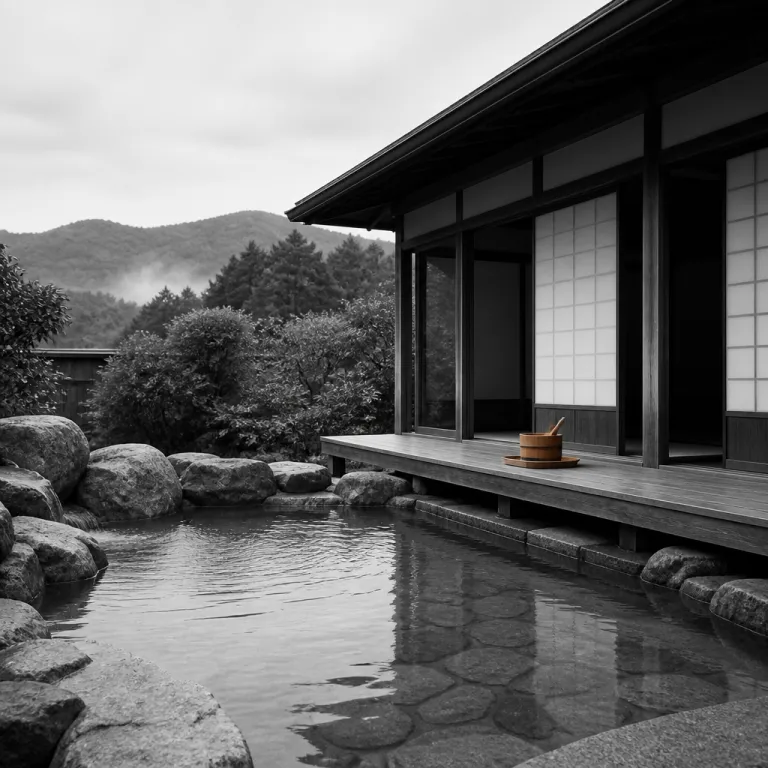
Hakone Tokinoshizuku as a refined base in Hakone Japan
Hakone Tokinoshizuku sits quietly in the mountains of Hakone Japan, offering a refined ryokan base for guests who value calm. This intimate property functions as a traditional hot spring inn rather than a conventional hotel, with just eight suites and rooms that prioritise privacy and slow time. In Hakone, a room with a private hot spring bath is the benchmark for luxury, and every Tokinoshizuku room here is designed around that expectation.
The address in Miyanoshita (499-1 Miyanoshita, Hakone-machi, Ashigarashimo-gun, Kanagawa) places the ryokan close to the historic Tozan Railway line and within easy reach of several train station hubs. Travellers usually arrive via Odawara Station, then transfer to the Hakone Tozan Railway toward Miyanoshita Station or nearby Kowakidani, before a short walk or taxi ride to the inn. This route through Hakone already sets the tone, as the mountain railway climbs slowly through cedar forests and hot spring valleys, turning the transfer into part of the experience rather than dead travel time.
Unlike a large star Hakone resort hotel, this small-scale retreat focuses on personalised service and traditional rhythm. Check in typically starts mid afternoon, which allows the team to prepare each suite and room with care, from arranging the futons to setting the electric kettle and tea service beside the low table. One guest from London described the arrival as “like stepping into a private mountain hideaway” after leaving the city behind. For visitors comparing several Hakone Japan options, the combination of private spring bath, limited rooms, and attentive staff makes Hakone Tokinoshizuku stand out as a strong choice for a first or repeat onsen stay.
Rooms, suites, and the art of private onsen time
Every room at Hakone Tokinoshizuku is built around its private hot spring bath, so the bathing ritual shapes the entire layout. Some rooms lean toward a Western style sleeping arrangement with low beds, while others keep to a classic tatami room format with futons that staff set out after dinner. In both cases, the suite style units feel generous, and the line between indoor living room and outdoor spring bath terrace is intentionally blurred.
Guest data from the property indicate there are only a handful of rooms in total, which keeps public areas quiet and ensures that private time in each spring bath remains undisturbed. A typical Tokinoshizuku hotel room will include an electric kettle, a flat screen television, and climate control, but the real luxury lies in the constant flow of natural spring water into the stone or hinoki tub. Because the hot spring water is piped directly, you can bathe whenever you wish, rather than waiting for shared facilities to open or close at fixed time slots.
For couples, a suite with a larger private bath allows both guests to stretch out and enjoy the hot spring together, while still leaving space for a small seating area and tatami room corner. Families or small groups may prefer rooms that combine Western style beds with a tatami living room, giving flexibility for different sleeping preferences. When you check availability on a luxury booking website, pay close attention to the room descriptions, as Hakone Tokinoshizuku lists subtle differences in bath size, view, and layout that significantly shape the stay.
For travellers planning multi stop itineraries that combine several onsen regions, curated itineraries such as elegant Japan tours with ryokan stays in top hot spring destinations can help you understand how a compact property like this compares with larger resorts. In that context, the limited number of rooms at Hakone Tokinoshizuku becomes a clear advantage for guests who value quiet. It also means that booking early is essential, especially during peak foliage and spring blossom seasons when demand for each room and suite rises sharply.
Hot spring bathing: from private spring bath to public areas
The defining feature of Hakone Tokinoshizuku is its integration of private hot spring bathing into everyday room life. Each Tokinoshizuku room has a dedicated spring bath fed by natural spring water, so you can step from tatami to hot stone within a few metres. This makes the ryokan particularly appealing for guests who feel shy about using large public areas in bigger onsen complexes.
Water quality in Hakone Japan varies by source, but the springs around Miyanoshita are known for their gentle, skin friendly mineral balance. At Hakone Tokinoshizuku, the hot spring water is typically maintained at a comfortable hot temperature, yet you can adjust your soak time easily because the bath is attached directly to your room or suite. Many guests choose to bathe three or four times a day, starting with a short morning spring bath, then a longer soak before kaiseki dinner, and finally a quiet late night immersion under the mountain sky.
While the focus is on private bathing, the ryokan also maintains shared public areas that echo the calm of the rooms, from small lounges to corridors lined with local art. These spaces are not designed as large communal bath halls, but rather as extensions of the intimate atmosphere that defines the Tokinoshizuku hotel experience. For travellers mapping a broader onsen journey, resources such as analyses of new openings like Hoshino’s Seto Inland Sea ryokan projects show how Hakone Tokinoshizuku fits into a national trend toward smaller, design focused hot spring properties.
In the context of Japan’s growing interest in traditional accommodations, one internal summary captures the appeal succinctly: “Luxury ryokan offering private hot springs.” That line reflects why Hakone Tokinoshizuku resonates with international guests who want the essence of a Japanese hot spring stay without sacrificing privacy. When you compare options on a premium booking website, always verify whether the hot spring is truly private to the room, or shared in public areas only, as this distinction dramatically changes the feel of your stay.
Access, stations, and the role of the Hakone Tozan Railway
Reaching Hakone Tokinoshizuku is straightforward once you understand the local rail network and station transfers. Most international travellers start from Tokyo, ride the main line to Odawara Station, then transfer to the Hakone Tozan Railway that winds into the mountains. From there, you continue toward Miyanoshita Station or nearby stops, then take a short taxi ride or gentle walk to the ryokan, depending on luggage and weather.
The Hakone Tozan line is more than a simple commuter route; it is part of the experience, as the mountain railway climbs steep gradients using switchbacks and passes dense forest and river gorges. Along the way, you will see signs for Hakone Yumoto, the first major hot spring town on the line, and for Yumoto Station, which serves as a gateway for many day trippers. Guests who prefer to minimise walking can arrange for a taxi from station Hakone Yumoto or from Miyanoshita Station directly to Hakone Tokinoshizuku, which is especially convenient if you are carrying large suitcases or travelling with older relatives.
Some visitors arrive via other nodes such as Odawara Station or even by bus from different parts of Hakone Japan, then connect to the train station closest to the ryokan. When planning your route on a booking website, check the last train times for the Hakone Tozan line, as services end earlier than urban lines and you will want to arrive at the ryokan before check in starts. If you are combining Hakone with coastal onsen stays, you might also look at ocean facing properties such as an oceanfront ryokan escape at Atami on Sagami Bay, then compare transfer times between Odawara Station, Atami, and Hakone Tokinoshizuku.
Because Hakone is compact yet hilly, many guests choose to walk short segments between the train station and their hotel to enjoy the mountain air. However, in wet or icy conditions, a taxi from Miyanoshita Station or from Hakone Yumoto can be a safer choice, especially if you are unfamiliar with the terrain. Either way, the journey through these stations and along the Hakone Tozan Railway frames your arrival, turning the approach to Hakone Tokinoshizuku into a gentle transition from city pace to onsen time.
Practicalities: check in, free parking, and what to expect in your room
Luxury and premium booking platforms often highlight the soft details that matter once you arrive at a ryokan, and Hakone Tokinoshizuku is no exception. Check in usually starts mid afternoon, around 15:00, giving staff time to prepare each room and suite with fresh linens, yukata, and seasonal amenities. Check out tends to be late morning, around 11:00, which leaves enough time for a final hot spring bath before you return to the station.
For guests arriving by car, free parking is a practical advantage, especially in a mountain town where space is limited. When you review the Tokinoshizuku hotel listing on a booking website, confirm that free parking is still available and whether spaces must be reserved in advance, as policies can change with demand. Once parked, most guests leave the car for the duration of their stay and rely on the Hakone Tozan Railway or local buses to reach museums, viewpoints, and other hot spring districts such as Hakone Yumoto.
Inside your room, you can expect a thoughtful mix of traditional and modern amenities. A flat screen television, electric kettle, and reliable climate control sit discreetly alongside tatami flooring, shoji screens, and low seating that frame the private spring bath. Public areas are kept intentionally calm, with soft lighting and minimal signage, so that the focus remains on the flow between your room, the hot spring, and the dining spaces rather than on hotel style corridors.
Because Hakone Tokinoshizuku operates as a small ryokan rather than a large star Hakone resort, staff can adapt to individual preferences more easily. If you need to check train times, arrange a taxi to the nearest station, or adjust meal timing slightly to fit your bathing schedule, the team will usually assist within reason. This flexibility, combined with the structure of check in and check out times, allows you to shape your own rhythm of room relaxation, spring bath sessions, and short walks around the neighbourhood.
Positioning Hakone Tokinoshizuku among top ryokan destinations
Within the broader map of top ryokan destinations in Japan, Hakone Tokinoshizuku occupies a niche that appeals to travellers who want intimacy without isolation. Hakone itself is one of the most accessible hot spring regions from Tokyo, and the combination of the Hakone Tozan Railway, multiple train station options, and frequent buses makes it easy to pair with other onsen areas. For many first time visitors, a stay at a ryokan in Hakone Japan becomes the reference point against which future hot spring trips are measured.
Compared with larger properties in Hakone Yumoto or around other star Hakone resort clusters, this ryokan’s compact set of rooms and suites creates a quieter, more residential feel. The focus on private spring bath facilities in every room means you never need to navigate crowded public areas or wait for a time slot in a shared bath. That design choice aligns with a wider trend in Japan toward smaller, experience driven ryokan stays, where the quality of the spring water, the privacy of the bath, and the flow of time in the room matter more than sheer scale.
For travellers building a multi region itinerary, Hakone Tokinoshizuku can be combined with coastal, island, or inland hot spring stays to create contrast in both scenery and style. Analytical pieces on new openings, such as discussions of Hoshino’s Seto Inland Sea projects, show how regional diversity is reshaping expectations of what a ryokan can be. In that context, the Tokinoshizuku hotel model, with its emphasis on private baths, limited rooms, and easy access from Odawara Station and other hubs, represents a mature expression of the classic mountain onsen stay.
When you evaluate options on a luxury booking website, consider how each ryokan balances access, privacy, and sense of place. Hakone Tokinoshizuku scores strongly on all three, thanks to its location near Miyanoshita Station, its all suite approach to private hot spring bathing, and its careful integration of Western style comforts into a traditional framework. For guests who value unhurried time in a room with its own spring bath, this property stands as one of the most compelling choices in Hakone and a benchmark for premium ryokan stays across Japan.
Key figures and statistics for Hakone Tokinoshizuku and Hakone ryokan stays
- Hakone Tokinoshizuku operates as a small scale luxury ryokan with a limited room inventory of around eight units, which places it firmly in the intimate boutique category and helps maintain a high staff to guest ratio.
- Recent guest reviews on major booking platforms indicate strong satisfaction levels for Hakone Tokinoshizuku, often highlighting the private hot spring baths and quiet atmosphere compared with many larger hot spring hotels in Hakone Japan.
- Check in at Hakone Tokinoshizuku typically starts around 15:00 and check out is usually around 11:00, giving guests ample access to their private spring bath during a standard one night stay.
- Hakone lies roughly 80 kilometres from central Tokyo, and the combined journey via Odawara Station and the Hakone Tozan Railway commonly takes between about 75 and 100 minutes, making it one of the most accessible top ryokan destinations for international visitors.
- Industry reports from the Japan Tourism Agency point to a steady increase in demand for traditional accommodations with private onsens, a trend that directly benefits properties like Hakone Tokinoshizuku that offer a private hot spring bath in every room.
FAQ about Hakone Tokinoshizuku and Hakone ryokan bookings
What amenities does Hakone Tokinoshizuku offer in its rooms?
Rooms and suites at Hakone Tokinoshizuku include a private hot spring bath, tatami or Western style sleeping arrangements, an electric kettle, a flat screen television, climate control, and traditional yukata. Each room is designed to maximise privacy and direct access to the spring bath. Public areas are intentionally limited to maintain a quiet, residential atmosphere.
Is Hakone Tokinoshizuku suitable for families or mainly for couples?
The ryokan is best known as a retreat for couples seeking tranquillity, but it can also accommodate small families in larger rooms or suites. Some units combine Western style beds with a tatami room area, which works well for parents and children. Families should check room configurations carefully on the booking website and contact the property in advance to confirm suitability.
How do I reach Hakone Tokinoshizuku from Tokyo by train?
From Tokyo, you typically travel to Odawara Station by Shinkansen or express train, then transfer to the Hakone Tozan Railway toward Miyanoshita Station or nearby stops. From there, a short taxi ride or walk brings you to the ryokan, depending on luggage and weather. Always check the latest train schedules, as Hakone Tozan services end earlier than major urban lines.
Does Hakone Tokinoshizuku provide free parking for guests arriving by car?
Yes, Hakone Tokinoshizuku offers free parking for staying guests, which is valuable in a mountainous area where space is limited. It is advisable to confirm availability and any reservation requirements when you book, especially during peak seasons. Once parked, many guests rely on local trains and buses to explore Hakone without moving the car.
How far is Hakone Tokinoshizuku from Hakone Yumoto and other key stations?
Hakone Tokinoshizuku is located in the Miyanoshita area, a few stops beyond Hakone Yumoto on the Hakone Tozan Railway. Travel time from Hakone Yumoto Station to Miyanoshita Station is usually around 20 minutes, followed by a short taxi ride or walk to the ryokan. Connections from Odawara Station and other regional hubs are straightforward, making the property easy to integrate into wider Japan itineraries.