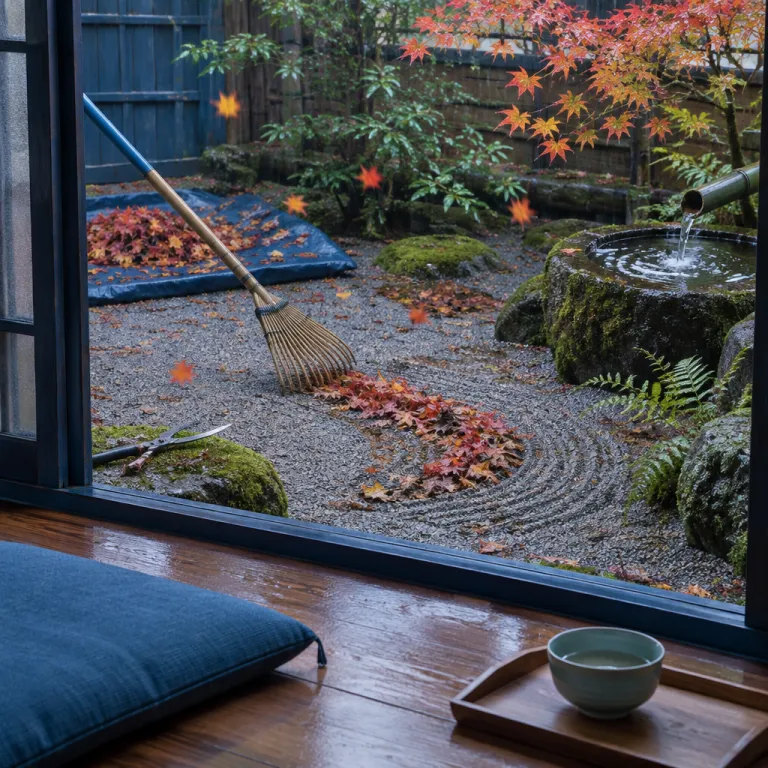
The niwashi’s script: how October writes itself in the garden
In a refined ryokan autumn garden in Japan in October, nothing is accidental. The niwashi, the garden artisan, has mapped each maple, stone lantern, and moss patch so that the autumn foliage reads like a quiet story from your tatami. When you book traditional inns for this season, you are not only reserving an onsen room but also a front row seat to a living composition of autumn colours.
Japanese maples are rarely placed directly in front of every guest room; instead, the best niwashi positions them at angles so that fall foliage frames the view, never blocks it. From your futon you see layered foliage early in the season, then foliage mid peak, and finally the bare branches that reveal deeper garden bones as late October approaches. This choreography means the best time to stay in a ryokan autumn garden in Japan in October is often when colour is still building, not when every leaf has already turned.
Altitude and latitude refine this script further, so the same ryokan garden reads differently across the country. In northern Tohoku, a garden near Ginzan or Zao might reach autumn foliage peak in mid October, while a similar design in Kyoto or Tokyo glows later, sometimes into early November. When you plan a per person per night stay, think in terms of early, early mid, mid, and mid late phases of the season rather than a single fixed date.
For couples, this timing becomes part of the romance. Arrive in early October and you may share the onsen under a canopy of mostly green with just a hint of fall, while a late October visit wraps the same bath in saturated reds and golds. The niwashi has anticipated both, using stone, water, and moss to keep the garden beautiful whether the foliage is early, at foliage mid, or drifting into late November.
The momiji palette and the window seat premium
Look closely at how the ryokan arranges its momiji, the Japanese maples, around your room. In the most considered ryokans, one maple will be aligned with the low window by the tokonoma alcove, another near the rotemburo open air onsen, and a third by the entrance path, so you experience autumn from arrival to evening bath. This is where a ryokan autumn garden in Japan in October earns its reputation and its room rate.
Garden facing rooms often cost more per person per night in October and early November, and the premium is rarely arbitrary. You are paying for the way autumn colours are staged outside your shoji, for the way fall foliage reflects in the garden pond at the exact access hour when the lanterns are lit. In Kyoto, where demand is intense, refined properties with strong garden design and private onsen can sell out months ahead for this season, especially those curated on specialist platforms that focus on Kyoto ryokan stays with room to relax.
When you compare ryokans, ask to see both garden and non garden categories. A room that faces a car park or the station side may be easier on the budget but misses the niwashi’s autumn foliage theatre, while a garden view room lets you read the full arc from foliage early to foliage mid and then to the spare beauty of late November. In many Kyoto and Tokyo properties, the best time to justify that upgrade is mid October to mid November, when the window becomes a private cinema for the season.
Couples who value slow mornings will feel this difference most. Breakfast taken in room with sliding doors open to the garden lets you watch the fall colours shift hour by hour, from the cool blue light of early day to the warm glow of late afternoon. If you plan to spend real time in your room rather than sightseeing from dawn to late night, the window seat premium in a ryokan autumn garden in Japan in October is usually worth every yen.
Reading colour by region: Ginzan, Zao, Akiu and the timing of fall
October in Japan is not one uniform season; it is a moving wave of colour that starts in the north and at higher elevations, then rolls south and down to the coasts. For ryokan travelers, that means a garden in Ginzan onsen or Zao onsen will show peak autumn foliage weeks before a similar garden in central Kyoto. Choosing the right region for your dates is as important as choosing the right property.
In Yamagata, the mountain hamlet of Ginzan onsen sits in a narrow valley where steam from riverside baths mingles with fall foliage on the slopes above. Here, the best time for a ryokan autumn garden in Japan in October is usually early to mid October, when the hillsides are painted in layered reds and golds and the wooden facades glow at night. Many ryokans are a few minutes by car from the small station, so factor in an access hour or more from larger hubs and expect total travel of around three to four hours from Tokyo by rail and road combined, depending on connections.
Nearby Zao onsen offers a different reading of the season, with higher altitude gardens that can turn as early as late September and blaze through mid October. Moss around stone basins stays intensely green while maples and beeches above shift into deep autumn colours, creating a strong contrast that photographers love. If you arrive in late October or early November, you may already be in the bare branch phase here, so consider shifting south to Akiu onsen near Sendai or even further to Kyoto for a later wave of colour.
Akiu onsen, reachable in roughly thirty to forty minutes by car from Sendai station, often peaks in mid to late October, making it ideal for couples who cannot travel earlier. From there, you can ride the shinkansen back to Tokyo and continue to Kansai, where Kyoto gardens may hold their best time for fall foliage into mid November and sometimes late November. For flexible travelers, planning a north to south arc across two or three ryokans lets you follow the season rather than chase a single uncertain weekend, especially if you take advantage of quieter shoulder dates highlighted in rate trend guides that show where September ryokan rates soften after summer.
Moss, fallen leaves and the onsen: how to actually stay
Once you arrive, the way you move through the property determines how fully you experience the garden. In a serious ryokan autumn garden in Japan in October, the moss is not background; it is the stage on which the leaves perform. The niwashi often allows some fallen leaves to rest on stepping stones or raked gravel, embracing wabi by showing beauty in transience rather than sweeping everything clean.
Plan your onsen sessions around light rather than only around meal times. A late afternoon bath, perhaps an hour before dinner, lets you see autumn foliage reflected in the water as the sky cools, while an early morning soak reveals the vivid green of moss beaded with dew and the first leaves of the day drifting down. In many ryokans, the outdoor onsen is positioned so that a single maple or ginkgo becomes the focal point of the season, and you can watch the shift from foliage early to foliage mid and finally to the spare lines of branches by early November.
Practical details matter for couples who want a seamless stay. Check the access hour from the nearest station, and whether the property offers a shuttle or expects you to arrive by car, especially in mountain areas where a last stretch of twenty to thirty minutes by car can feel longer after a full travel day of several hours of combined trains and transfers. When comparing per person per night rates, remember that the most refined properties in Kyoto, Tokyo, Ginzan, Zao, and Akiu onsen often include kaiseki dinner and breakfast, so the premium reflects both cuisine and the garden stage set outside your window.
If you are torn between a city stay and a more remote retreat, consider pairing them. Spend two nights in a central Kyoto property with an intimate courtyard garden and easy access to elegant onsen focused retreats curated as Kyoto onsen escapes, then add a night or two in a Tohoku mountain ryokan where the autumn colours arrive earlier. Read the garden as you would a work of art, from composition and colour to how it changes between early, mid, and late October, and you will understand why this season commands such loyalty from repeat guests.
FAQ
What is the best time in October to book a ryokan for autumn gardens ?
The best time in October depends on where in Japan you are heading and at what altitude your chosen ryokan sits. In northern and higher elevation areas such as Ginzan onsen and Zao onsen, early to mid October often brings peak autumn foliage, while Kyoto and Tokyo gardens usually reach their most intense colours from mid October into early November. For a ryokan autumn garden in Japan in October, couples who want strong colour without crowds often aim for weekdays in the early mid or mid late part of the month.
How far in advance should I reserve a garden view room ?
For sought after ryokans in Kyoto, Tokyo, and famous onsen towns, garden facing rooms in October can sell out several months ahead. Properties in Ginzan, Zao, and Akiu onsen may have slightly more flexibility, but weekends around mid October and early November still book quickly. If a garden view is essential to your stay, reserve as soon as your travel dates are fixed and confirm whether the room directly faces the main garden or a secondary courtyard.
Is the premium for a garden view room really worth it for couples ?
For couples who plan to spend time in the room, the premium is usually justified in October and November. A garden view lets you watch the progression from foliage early to foliage mid and then to late season minimalism without leaving your tatami, turning quiet hours into part of the experience. If you expect to be out sightseeing from morning to late evening, you might prioritise a better onsen or kaiseki menu over the most expensive view category.
How do I choose between different autumn regions like Ginzan, Zao, Akiu and Kyoto ?
Choose based on your travel dates, your tolerance for cooler temperatures, and how much transit time you accept. Ginzan onsen and Zao onsen offer dramatic mountain scenery and earlier colour, but they require more hours of combined rail and car travel from Tokyo. Akiu onsen balances access and nature, while Kyoto delivers the most layered cultural context for autumn gardens, especially if you want to pair temple visits with a ryokan autumn garden in Japan in October.
What should I look for in a ryokan garden layout when booking online ?
When you review photos and plans, look for how the garden relates to guest rooms, the onsen, and shared lounges. A strong design will frame views from low windows, show moss and stone in the foreground with autumn colours behind, and offer at least one path where fallen leaves are allowed to remain as part of the composition. If the gallery focuses only on interiors and food with few garden shots, the outdoor experience may be secondary, so prioritise ryokans that clearly treat the garden as a central part of the season.