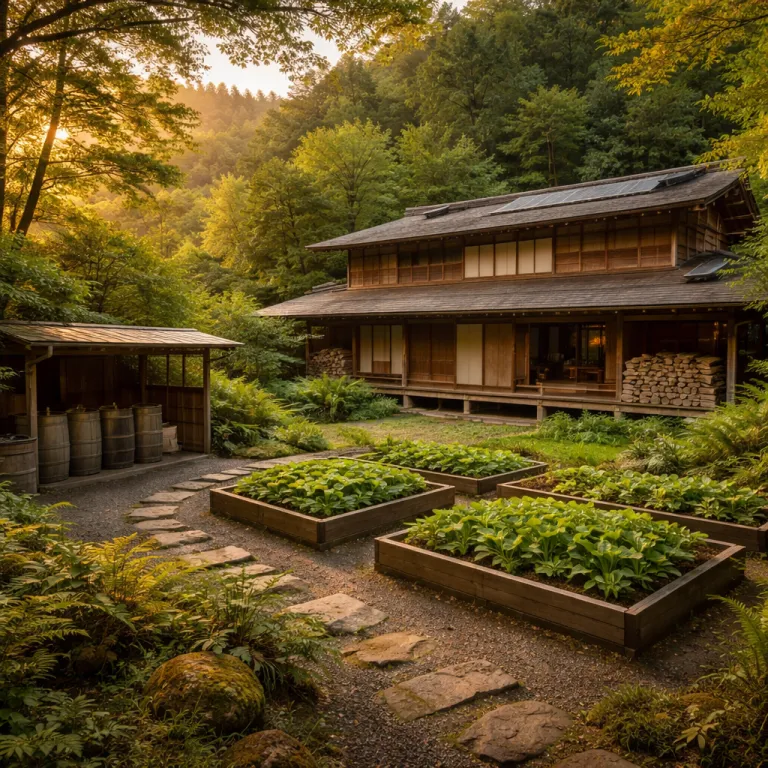
How to Choose a Truly Sustainable Luxury Ryokan
A sustainable luxury ryokan is not a marketing slogan; it is a cost structure you can almost read in the room rate. When a traditional Japanese inn commits to local sourcing, heritage maintenance and long term staff training, the economics shift away from discount campaigns and towards quietly higher kaiseki prices that actually fund those choices. A family planning a premium stay needs to understand that genuine sustainability rarely appears as a bargain, but as a carefully justified investment in time, craft and community.
Think about the kaiseki dining room first, not the open air bath on the terrace. A chef who insists on an array of ingredients from within roughly 50 kilometres pays more for seasonal vegetables, river fish and wagyu, and that local sourcing premium shows up in the multi course menu cost rather than in a flashy sustainability badge. When you see a luxury suite advertised with unlimited drinks and a very low dinner supplement, ask yourself whether that onsen ryokan is really supporting nearby farmers or quietly importing bulk produce from far beyond the region.
Certifications such as Green Key or EarthCheck can be useful signals, yet they are no longer a reliable filter on their own. Bettei Senjuan, a luxury ryokan in Gunma, holds respected certification and pairs it with meticulous traditional Japanese architecture, but many newer properties chase the same labels without matching the depth of practice. Bettei Senjuan’s published environmental policy notes targets for energy, waste and water management, illustrating how certification can be backed by transparent documentation rather than just a logo on a booking page.
Families often focus on whether a room has a private hot spring bath or a private open air bath on the balcony. Those features matter for comfort with children, but they are also energy and water intensive, and a truly sustainable luxury ryokan will be transparent about how it manages that impact. When you compare suites and standard rooms, look beyond the tatami mats and the Japanese style décor, and ask how the property circulates and reuses hot spring water across its various spring baths and air baths; many leading properties now track reuse ratios or flow limits as internal benchmarks, even if they do not publish exact percentages.
On a premium booking website, the most sustainable choice is rarely the newest or the most aggressively designed. A traditional ryokan with a modest number of rooms, a long serving kaiseki chef and a clear story about its local artists and craftspeople will usually have higher fixed costs per guest night than a large resort, and that is precisely why its rates feel firm. If a property claims deep sustainability while undercutting every competitor in Hakone or Naoshima, treat that as a prompt to ask sharper questions rather than as a lucky find.
The five questions that cut through certification theatre
Eco labels have reached the point of certification theatre; they decorate booking pages without telling you what actually happens behind the shoji screens. To navigate this, use a five question framework that works for any sustainable luxury ryokan, whether you are booking a compact style room for two or a large family suite with a private open air bath. These questions are simple enough to send by email, yet precise enough to reveal whether the property’s sustainability story is structural or superficial.
First, ask about local sourcing within roughly 50 kilometres of the ryokan. Phrase it in human terms, such as whether most ingredients for the kaiseki dinner and breakfast come from nearby producers, and whether the menu changes with time and season to reflect that. A property that can name specific farms, fisheries and local artists, and that explains why some items must come from further away, is usually investing real money in the community rather than just curating an attractive narrative.
Second, inquire about water reuse in the onsen circuit, especially if your room includes a private hot spring bath or a semi open air bath. A serious onsen ryokan will be able to explain how it manages the flow between large communal spring baths, smaller family baths and any in room air baths or stone tubs, while respecting local regulations and the geology of the source. If the answer is vague, yet the property promotes dozens of oversized room open air baths, you can safely assume that spectacle has taken priority over careful resource management.
Third, ask about the kaiseki chef’s tenure and the broader kitchen team. Long serving chefs anchor traditional Japanese culinary practice, and their presence usually signals that the owners value continuity over constant reinvention. When a luxury ryokan in Kanazawa or Kyoto mentions that its chef has been refining the same core style for decades, you can expect a dining room where technique, ingredient knowledge and restraint outweigh Instagram friendly plating, and where sustainability is embedded in portioning and waste reduction.
Fourth, raise the question of succession planning and owner operator continuity. Many of the most compelling Japanese style ryokans are family businesses, and a clear plan for the next generation often correlates with ongoing investment in building maintenance, tatami mats replacement and staff training. If the property is owned by a distant fund with frequent management changes, it may still be comfortable, but its sustainability commitments are more likely to shift with each budget cycle.
Finally, ask about cultural programming for guests, especially for families with children. A sustainable luxury ryokan that offers small group tea ceremonies, calligraphy sessions with local artists or guided walks to nearby shrines is actively investing in cultural sustainability, not just environmental metrics. When you read about premium ryokan booking and elevated onsen experiences in Kanazawa, for example, the most persuasive properties are those that treat culture as a living practice rather than as a themed backdrop for photos.
How to ask hard questions at booking – and three ryokans that welcome them
Many travellers hesitate to ask probing questions, worried about sounding like auditors rather than guests. In practice, the most serious sustainable luxury ryokan teams welcome informed curiosity, because it signals that you value the same long term commitments they do. The key is to frame each question around your family’s stay, linking sustainability to comfort, learning and the specific Japanese style room or suite you are considering.
When you write to a property, reference the exact room type, such as a luxury suite with a private open air bath, and explain that you are choosing between several ryokans. Then ask how this particular room uses hot spring water, how often the tatami mats are renewed and whether any local artists contributed to the interior art. By tying your questions to the room, you make it clear that you are not collecting data for a report, but trying to understand how the ryokan’s values will shape your stay.
Families can also connect sustainability questions to children’s experiences. You might ask whether the dining room can adapt the multi course kaiseki for younger palates while still using the same local supply chain, or whether there are short cultural activities at the property that work for different age groups. A thoughtful onsen ryokan will often respond with an array of suggestions, from brief tea introductions to simple craft workshops, and that responsiveness is itself a sign of a well trained, stable équipe.
Three properties illustrate how strong answers feel in practice. Bettei Senjuan in Gunma combines a serene mountain setting with a limited number of rooms, carefully managed spring baths and a long term commitment to both Green Key certification and local sourcing, and its team is unusually transparent about costs and constraints in its published sustainability policies. COVA KAKUDA, a cluster of four secluded villas, shows how a small modern property can balance private hot spring baths, contemporary air conditioning and renewable energy systems while still grounding its design in traditional Japanese sensibilities.
Naoshima Ryokan Roka, on the art island of Naoshima, integrates contemporary art commissions by local artists into its Japanese style rooms and public spaces, and treats cultural programming as a core part of its sustainability strategy rather than as an add on. Madoka no Mori, meanwhile, has reported pilot projects using hydrogen based cooking for in room dining, with regional tourism reports noting demonstration trials that apply low emission burners to traditional kaiseki service. For a deeper dive into how cultural sustainability is being formalised, the work of the Mukayu Omotenashi Institute at Beniya Mukayu shows how training, heritage and guest education can be woven into a coherent long term model.
Reading between the lines of room types, locations and rates
Once you start looking closely, the language of room descriptions and locations tells you as much about sustainability as any certification logo. A sustainable luxury ryokan rarely offers an endless array of near identical rooms; instead you will see a compact inventory of carefully differentiated Japanese style rooms, some with private open air baths, others with shared spring baths that make more efficient use of the onsen source. That restraint in size and variety is not a lack of ambition, but a sign that the property is matching capacity to what the land and water can support.
Location is another quiet indicator. Properties perched directly above a major station with dozens of floors and hundreds of rooms may be convenient, but their scale and concrete structure make deep sustainability difficult, no matter how modern the air systems or how efficient the heat pumps. By contrast, a ryokan in Hakone or Yudanaka with a handful of suites, timber construction and a long history of maintaining its spring bath infrastructure can often achieve a more balanced relationship between guest comfort and resource use.
Look closely at how the property describes air baths, open air baths and in room hot spring facilities. When every room open air bath is oversized and heavily promoted, yet there is little explanation of the onsen source or water management, you are probably seeing design led marketing rather than sustainability led engineering. A more thoughtful luxury ryokan will often highlight a few private hot spring options while emphasising the quality of the main communal spring baths, where water can be circulated and monitored more efficiently.
Pricing patterns also speak volumes. Genuine sustainability tends to show up as slightly higher kaiseki charges, steady year round rates and limited discounting, because the property is covering the real costs of local sourcing, staff retention and heritage maintenance. When you compare options for an elegant ryokan experience in regions such as Hiroshima, you will notice that the most convincing properties are not the cheapest, but the ones whose pricing aligns with a clear story about people, place and time.
For families, the most sustainable choice is often a mid sized Japanese style room with shared onsen access rather than the largest possible suite with multiple private open air baths. Children still enjoy the ritual of washing, stepping into the hot spring and padding back across warm tatami mats, while the property avoids multiplying energy and water use across too many individual facilities. As you refine your shortlist on a premium booking website, treat each detail – from room size and layout to cultural programming and chef tenure – as part of a single, coherent picture of what sustainability really means at that ryokan.
Key figures shaping sustainable luxury ryokan stays
- Bettei Senjuan’s recognised sustainability work, including Green Key certification, reflects a multi year commitment to environmental management and has helped position it as a reference point for sustainable luxury in Gunma Prefecture (source: Bettei Senjuan sustainability policy and Green Key programme documentation).
- COVA KAKUDA operates just four villas, a scale that allows close control of energy use, water consumption and staff training, illustrating how smaller inventories can support deeper sustainability practices in luxury ryokan operations (source: COVA KAKUDA property information and operator interviews reported in regional hospitality media).
- Naoshima Ryokan Roka opened as the first full scale ryokan on Naoshima, aligning its launch with the island’s established art tourism and using that context to integrate local artists and cultural programming into its sustainability approach (source: Japan National Tourism Organization luxury travel materials and Naoshima tourism resources).
- Madoka no Mori’s exploration of hydrogen based cooking for selected in room dining experiences demonstrates how energy innovation can be applied even to traditional kaiseki formats, reducing emissions while maintaining a high end guest experience (source: Madoka no Mori official communications and regional tourism reports on hydrogen demonstration projects).
References
- Green Key Global – international eco certification programme for tourism properties, including Japanese ryokans.
- Japan National Tourism Organization – resources on luxury and sustainable travel in Japan, with case studies on onsen ryokan regions.
- Phocuswright and Phocuswire – analysis of Japan’s high yield, sustainability focused tourism strategy and evolving guest expectations.