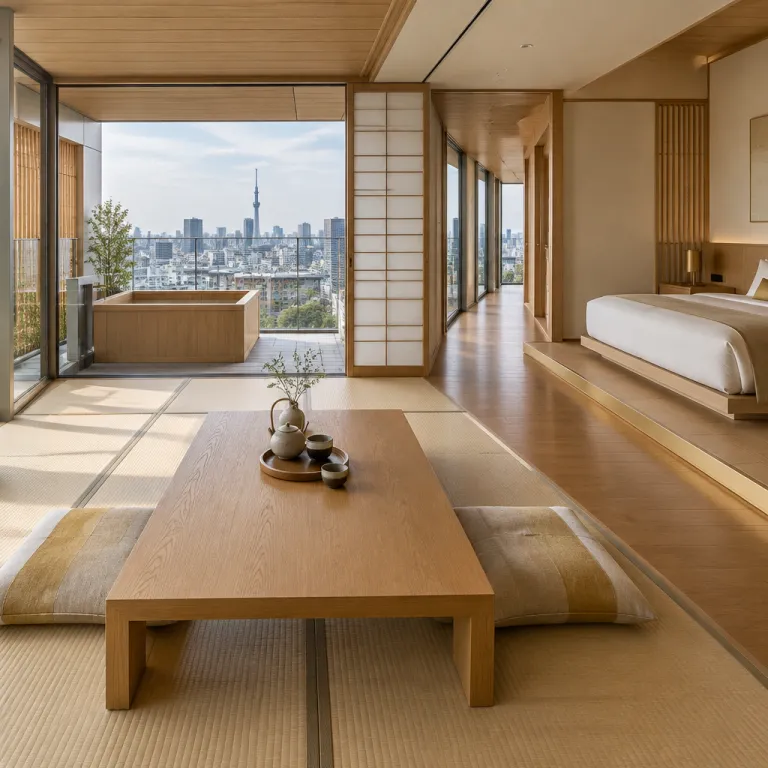
Why ryokan accommodation in Tokyo redefines the urban stay
Ryokan accommodation in Tokyo offers a calm counterpoint to the city’s neon energy. In a single stay you can move from crowded crossings in Tokyo to a tatami-lined room where time seems to slow. This contrast is what makes choosing a ryokan over a conventional hotel in Japan so compelling.
In central districts such as Shinjuku, you now find urban ryokans that blend traditional Japanese style with discreet contemporary comfort. These properties keep the essence of a classic Japanese inn experience in Tokyo, yet they adapt it to the rhythm of business trips and short city escapes. Guests can check into a quiet onsen room, enjoy a refined breakfast and dinner, then step outside and be in the middle of Tokyo within minutes.
For many travelers, the appeal lies in the combination of private onsen options and impeccable Japanese hospitality. A luxury ryokan in Tokyo may offer an onsen terrace attached to the suite, a semi open-air bath, or a fully enclosed bath with its own changing area. This level of privacy is rare in a dense metropolis and turns even a short stay into a restorative ritual, especially for guests who prefer to avoid busy public bath areas.
Choosing between traditional and urban ryokan styles in Tokyo
Not every ryokan accommodation in Tokyo follows the same blueprint, so clarifying your priorities is essential. Some inns lean fully into traditional Japanese architecture with tatami floors, shoji screens, and low tables, while others adopt a more hybrid Japanese style that feels lighter and more minimal. The right choice depends on whether you want full immersion or a softer introduction to the ryokan world.
Properties such as Hoshinoya Tokyo show how an urban luxury ryokan can feel like a discreet tower retreat hidden in plain sight. Each room is designed as a contemporary onsen ryokan chamber, with deep soaking baths that echo the feeling of a hot spring even when the water is not geothermally sourced. Guests here enjoy a curated breakfast, a seasonal kaiseki dinner, and quiet lounges on each floor that function as shared living rooms rather than anonymous hotel corridors.
In Shinjuku, Yuen Shinjuku has become a reference for travelers seeking a more accessible ryokan-style stay in Tokyo. This property offers a compact onsen room selection, a serene public bath, and a rooftop open-air pool that evokes a Tokyo onsen atmosphere above the skyline. For a deeper dive into how urban ryokans in Tokyo and Kyoto reinterpret tatami living, consult this detailed guide on the urban ryokan typology in major Japanese cities.
Onsen experiences in and around Tokyo for discerning guests
One of the main reasons travelers seek ryokan accommodation in Tokyo is access to onsen culture without leaving the capital. While central Tokyo does not sit on a major hot spring source, several luxury properties recreate the ritual through carefully designed baths and, in some cases, piped-in mineral-rich water. The result is a spectrum of experiences ranging from intimate private onsen suites to expansive public bath areas with city views.
When you book an onsen ryokan stay Tokyo side, pay attention to how the baths are described. An onsen room may feature a deep cedar tub on a balcony, marketed as an open-air bath, or a partially enclosed terrace that still allows fresh air to circulate. Some ryokans highlight an air-bath concept, where ventilation and natural airflow are prioritized to keep the bath private yet connected to the outdoors.
Travelers willing to pair their Tokyo stay with a short escape often head to hot spring regions such as Hakone or the shores of Fuji Kawaguchiko. Here, a luxury ryokan can offer a genuine hot spring onsen tub with a direct view of Mount Fuji or the surrounding forests. For an example of how refined these experiences can be, explore this review of a carefully curated onsen escape for luxury ryokan guests, which illustrates the level of detail you can expect in similar Japanese properties near Tokyo.
Rooms, meals, and service rituals that define a luxury ryokan stay
At the heart of any ryokan accommodation in Tokyo is the room, which functions as both bedroom and living space. A classic Japanese-style room will feature tatami flooring, futon bedding that attendants lay out each evening, and a low table where tea is served on arrival. Many luxury ryokan properties now also offer hybrid rooms with Western beds while preserving the traditional Japanese aesthetic.
Meals are another defining element, and serious travelers always check how breakfast and dinner are handled before confirming a stay. In many ryokans, breakfast–dinner combinations are included in the rate, with elaborate kaiseki dinners showcasing seasonal ingredients from across Japan. Morning breakfast can range from a delicate Japanese set with grilled fish and miso soup to a more international plate, yet the emphasis on presentation and balance remains constant.
Service rituals distinguish a luxury ryokan from a standard hotel, especially in Tokyo where time is precious. Staff will often guide you personally to your room, explain how to use the public bath or private onsen facilities, and outline the timing for your meals. This attentive yet unobtrusive approach allows you to settle into the air of calm that defines a refined ryokan stay Tokyo experience; for instance, some properties schedule staff to adjust futons and lighting while you are at dinner so the room feels transformed when you return.
Planning your city escape: locations, views, and nearby excursions
Location is crucial when selecting ryokan accommodation in Tokyo, because each district offers a different rhythm. Shinjuku appeals to travelers who want nightlife, shopping, and easy transport while still retreating to a quiet onsen room at the end of the day. Other guests may prefer business-focused areas where a luxury ryokan sits close to offices yet maintains a serene Japanese-style interior.
Views are another key factor, especially for travelers who dream of glimpsing Mount Fuji from their bath. While central Tokyo ryokans rarely guarantee a Fuji view, some high-floor suites in properties like Hoshinoya Tokyo offer sweeping cityscapes that feel equally cinematic. For more reliable Fuji Kawaguchiko panoramas, consider pairing your Tokyo onsen stay with a night or two at a lakeside onsen ryokan that specializes in open-air baths facing the mountain.
Many travelers combine a few nights of ryokan accommodation in Tokyo with side trips to Kyoto or Hakone to deepen their understanding of Japanese hospitality. A curated itinerary might include an urban ryokan in Shinjuku, a traditional hot spring retreat in Hakone, and a machiya-style stay in Kyoto. For inspiration on serene hot spring properties beyond the capital, review this in-depth feature on a serene Hakone ryokan for refined onsen stays, which shows how a change of air and scenery can complement your Tokyo offer of cultural experiences.
How to book luxury and premium ryokans in Tokyo with confidence
Securing the right ryokan accommodation in Tokyo requires more nuance than booking a standard hotel room. Availability for top-tier luxury properties can be limited, especially when Japanese holidays or major events drive demand. Planning ahead allows you to check multiple dates, compare room categories, and secure a private onsen or bath option before they sell out.
When reviewing ryokans online, focus on floor plans, bath descriptions, and meal policies rather than only star ratings. Look for clear explanations of whether the onsen is a true hot spring, how the public bath is arranged, and whether breakfast–dinner combinations are mandatory or optional. Pay attention to photos of the onsen room and any open-air bath, as these images reveal how much natural light and fresh air you can expect during your stay.
Travelers who value discretion should prioritize ryokan accommodation in Tokyo that offers onsen terraces or fully enclosed air-bath designs. These layouts allow you to enjoy the therapeutic rhythm of bathing without sharing space in a public bath, which some guests prefer to avoid. By cross-checking reviews, contacting the property directly when needed, and using specialized booking platforms focused on Japan, you can align your stay Tokyo plans with the exact level of comfort and privacy you seek.
Design, wellness, and the sensory atmosphere of Tokyo ryokans
The most memorable ryokan accommodation in Tokyo engages all the senses from the moment you arrive. Subtle incense in the lobby, the feel of tatami under bare feet, and the sound of running water near an onsen room all contribute to a distinct atmosphere. This sensory layering is deliberate and reflects centuries of Japanese design philosophy.
Architects working on contemporary luxury ryokan projects in Tokyo often draw on traditional Japanese-style elements while using modern materials. You might see cedar and cypress in the bath areas, soft washi paper lighting in corridors, and carefully framed windows that direct your view toward a courtyard garden rather than the street. Even in dense districts like Shinjuku, ryokans such as Yuen Shinjuku manage to create a pocket of calm air that feels far removed from the city outside.
Wellness is not limited to the hot spring or private onsen facilities, although these remain central to the experience. Many ryokans now integrate gentle stretching classes, tea ceremonies, or quiet reading lounges to extend the sense of retreat beyond the bathing zone. When all these elements align, your stay in a Tokyo onsen–focused property becomes less about a single night’s sleep and more about a complete reset of body and mind.
Key figures on ryokan stays and onsen travel in Japan
- According to the Japan Tourism Agency’s “Accommodation Travel Statistics Survey” for 2019, domestic and international guests generated over 140 million overnight stays in traditional accommodation such as ryokans across Japan in a recent pre-pandemic year, highlighting the enduring appeal of this format compared with standard hotels. This figure is drawn from the agency’s published statistical tables for that period.
- Data from the Japan Spa Association, summarized in its 2021 overview of hot spring resources, indicates that there are more than 2,900 officially registered hot spring areas nationwide, which means travelers seeking an onsen ryokan stay can choose from thousands of properties beyond Tokyo while still pairing them with a city escape. The association’s report lists these onsen districts by prefecture.
- Surveys by the Japan National Tourism Organization (JNTO) in the late 2010s show that more than 30 percent of international visitors list staying in a traditional Japanese accommodation and using an onsen as a top three motivation for visiting Japan, placing ryokan experiences alongside food and cultural sightseeing. These findings appear in JNTO’s published visitor motivation surveys.
- Market research from the Japan Ryokan and Hotel Association, published around 2018, suggests that luxury ryokan properties with private onsen or open-air bath facilities can command room rates that are 20 to 40 percent higher than comparable hotels, reflecting strong demand for privacy and authentic bathing rituals. The association’s analysis compares average daily rates across different property types.
FAQ about ryokan accommodation in Tokyo
Is ryokan accommodation in Tokyo suitable for first time visitors to Japan ?
Ryokan accommodation in Tokyo works very well for first time visitors because it combines easy access to transport with an introduction to traditional Japanese hospitality. Urban ryokans often provide clear guidance on etiquette for using the public bath or private onsen, which helps newcomers feel at ease. Choosing a property with some Western-style comforts, such as beds instead of futons, can make the transition even smoother.
How many nights should I plan for a ryokan stay in Tokyo ?
Most travelers find that one or two nights of ryokan accommodation in Tokyo is enough to experience the rituals without sacrificing time for city exploration. A common pattern is to book two nights in a luxury ryokan with breakfast–dinner included, then move to a different hotel for the rest of the trip. If you plan side trips to places like Kyoto or Hakone, you can add additional ryokan nights there for more hot spring–focused stays.
Can I find ryokans in central districts like Shinjuku ?
Yes, several ryokan-style properties operate in central districts such as Shinjuku, offering a blend of Japanese-style rooms and modern conveniences. Yuen Shinjuku is a well-known example, with a calm public bath and compact onsen room options close to major train lines. Staying in this kind of urban ryokan allows you to enjoy tatami floors and traditional meals while remaining within walking distance of Tokyo nightlife and shopping.
Do all ryokans in Tokyo have natural hot spring water ?
Not all ryokan accommodation in Tokyo uses natural hot spring water, because the city is not built directly on major geothermal sources. Many properties recreate the onsen experience with carefully heated and filtered water in beautifully designed baths, while some pipe in mineral-rich water from nearby hot spring regions. If bathing in a true hot spring is essential for you, always check the property description or contact the ryokan directly to confirm the water source.
What should I know about etiquette in a public bath or onsen ?
When using a public bath or onsen at a ryokan, you must wash thoroughly at the shower stations before entering the shared pools. Swimsuits are usually not allowed, and guests are expected to keep towels out of the water while maintaining a quiet, respectful atmosphere. If you feel unsure about any step, staff at luxury ryokan properties in Tokyo are accustomed to international visitors and can explain the process discreetly.