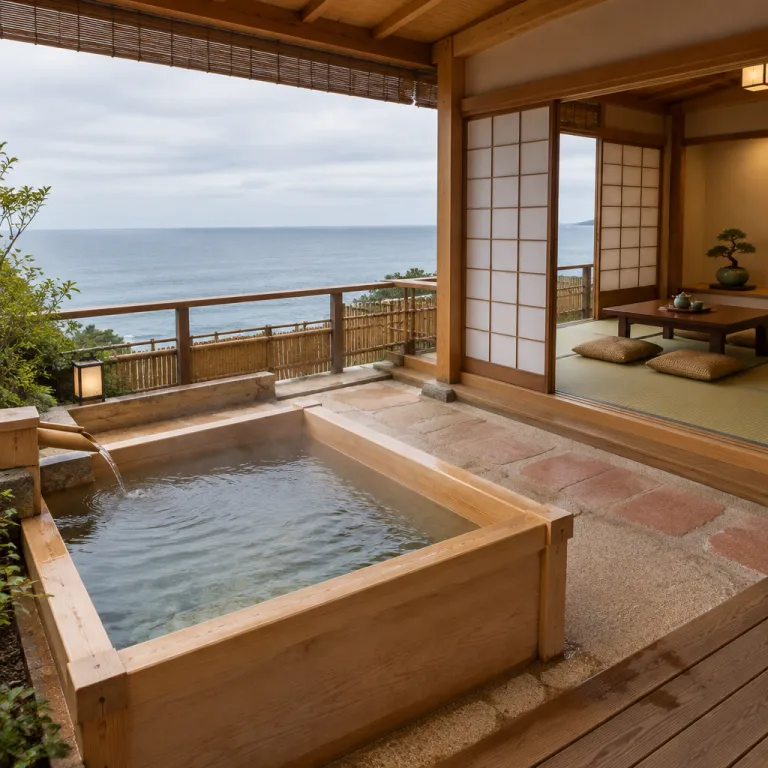
Atami Onsen Shukaen Yu-no-Hanazen as a refined oceanfront base in Japan
Atami Onsen Shukaen Yu-no-Hanazen sits quietly above the bay in Atami, offering a refined ryokan experience for travelers who value calm and detail. This part of Japan has long been associated with hot spring culture, and the property uses its position to frame every stay around the rhythm of the ocean and the steam of the onsen. From the first step onto the tatami mats in your room, you feel the shift from urban pace to traditional Japanese time.
The ryokan is arranged so that many style rooms face the water, giving a wide ocean view that changes with the light and the weather. Several rooms open toward the sea with large windows or terraces, and at night the soft night view of Atami curves along the coast while the air carries a faint scent of salt. Guests who choose Japanese style rooms with tatami mats and low tables can enjoy a private tea moment before slipping into a yukata for an evening walk through the corridors toward the baths.
Atami Onsen Shukaen Yu-no-Hanazen draws its hot spring water from the Atami onsen source, known for clear, gently alkaline hot springs that feel silky on the skin. The main communal baths include both indoor pools and open air baths, where the contrast between the warm water and the cool air is part of the ritual. For travelers who prefer more seclusion, the property offers private onsen options and air baths that can be reserved per person per night, allowing couples or families to enjoy the hot spring in complete privacy.
Rooms at this ryokan are organized around comfort and quiet, with a choice between Western beds and traditional Japanese futons laid directly on tatami mats. Typical categories include Japanese style rooms with ocean view, mixed Japanese Western rooms, and suites with a private open air bath on the balcony. When you book, pay attention to the room descriptions, because some rooms include both an indoor air bath and an outdoor tub, while others focus on a single large hot spring bath with a panoramic view.
For guests arriving from Tokyo, Atami is about 40 to 50 minutes away by Tokaido Shinkansen from Tokyo Station to Atami Station, and from Atami Station the ryokan is typically reached in several minutes by bus or taxi. The short transfer time means you can leave the city after breakfast and be in your yukata, stepping into an onsen, before lunch. This ease of access makes Atami Onsen Shukaen Yu-no-Hanazen a strategic base for a one night escape or a longer multi night stay, especially for those who want to balance sightseeing with slow time in the baths.
Choosing the right room and onsen style for your stay
Selecting the right room at Atami Onsen Shukaen Yu-no-Hanazen shapes the entire stay, especially if you are new to a traditional Japanese ryokan. Start by deciding whether you want a Japanese style room with tatami mats and futons, or a hybrid style where Western beds share space with a low table and cushions. Japanese style rooms create a more immersive feeling, while mixed style rooms can be more comfortable for guests who prefer familiar bedding but still want the atmosphere of Japan.
Many travelers prioritize an ocean view, and at this ryokan several rooms open directly toward Sagami Bay with wide windows or terraces. When you compare categories, look for mentions of private onsen, open air baths, or an air bath on the balcony, because these details indicate how much hot spring access you will have without leaving your room. For couples planning a special night, a room with a private open air bath allows you to enjoy the hot springs at any hour, including a quiet night view when the town lights shimmer on the water.
Meal plans are another key decision, and the most popular option is a breakfast dinner package where both meals are included in the person per night rate. A traditional Japanese breakfast usually features grilled fish, rice, miso soup, and small seasonal dishes, while dinner highlights local seafood and vegetables from the Atami region. If you prefer flexibility, you can choose a plan with only Japanese breakfast included and explore nearby restaurants for dinner, but many guests find that staying in for the full kaiseki style experience is part of the ryokan charm.
On a luxury and premium booking website for ryokans, pay close attention to the cancellation policy for each room and meal plan. Some offers allow free cancellation up to several days before arrival, while others with limited style rooms or private onsen access may require a stricter cancellation schedule. When you see a very attractive rate per person per night, check whether breakfast dinner is included and whether any changes to your stay dates will incur fees.
Seasonality also matters in Atami, especially if you plan to combine your stay with regional travel such as autumn foliage trips or coastal excursions. For example, travelers who follow detailed guides to peak foliage and hot spring stays, such as those focusing on the busy autumn booking calendar, quickly learn that popular onsen towns can sell out weeks in advance. If you are targeting a specific festival, fireworks event, or a weekend near a public holiday, secure your preferred room type and ocean view early, then choose a cancellation policy that matches how fixed your travel dates are.
Immersive hot spring rituals and open air bathing
The heart of Atami Onsen Shukaen Yu-no-Hanazen is its onsen culture, which blends traditional Japanese etiquette with modern comfort. Before entering any hot spring baths, guests wash thoroughly at the shower stations, sitting on small stools and rinsing carefully so the shared water remains clear. This simple act sets the tone for a stay that values respect, quiet, and a shared appreciation of the hot springs.
Communal baths at the ryokan usually include both indoor pools and open air baths, each fed by natural hot spring water from Atami onsen. Indoor spaces are warm and calm, while the open air sections frame the sky and, in some cases, a partial ocean view or a glimpse of the surrounding hills. Moving between the indoor bath and the open air bath lets you feel how the outside air cools your skin between soaks, which many guests find deeply relaxing after a long travel day in Japan.
For guests who prefer privacy, the property’s private onsen options and reserved air baths are a major advantage. These private baths allow couples, families, or shy travelers to enjoy the hot springs without sharing the space, and they are often booked per person per night or per time slot. When you reserve through a premium booking website, look for clear descriptions of which rooms include a private open air bath and which require a separate reservation for a private onsen session.
Hot springs at Atami Onsen Shukaen Yu-no-Hanazen are typically kept at a temperature that encourages slow soaking rather than quick dips. Many guests like to bathe before Japanese breakfast, again in the late afternoon, and once more at night, when the night view over Atami is quiet and the air feels cooler. One guest described stepping into the open air bath on a cool evening and hearing only waves and distant train sounds, calling it “the moment the whole trip finally slowed down.”
Travelers who are exploring multiple hot spring regions in Japan often compare Atami with other famous onsen belts, such as the steaming districts of Beppu in Oita. Guides that trace the route from mountain springs down to the sea show how each region has its own mineral profile, bathing style, and landscape, and Atami’s strength lies in its combination of oceanfront views and easy access from Tokyo. Using Atami Onsen Shukaen Yu-no-Hanazen as a base, you can experience this coastal hot spring character while still having time to visit other ryokan destinations on the same trip.
Dining, yukata rituals, and the rhythm of a ryokan night
Meals at Atami Onsen Shukaen Yu-no-Hanazen are designed as quiet ceremonies that anchor your stay in local flavor. When breakfast dinner is included in your booking, you can expect a multi course evening meal that highlights seafood from Sagami Bay, seasonal vegetables, and carefully plated small dishes. The next morning, a Japanese breakfast brings grilled fish, rice, pickles, and miso soup, creating a balanced start before another visit to the onsen.
Guests usually wear a light cotton yukata provided in the room, which can be worn to the dining area, the baths, and around the corridors. This simple garment signals that you have stepped into a different rhythm, where comfort and modesty replace formal clothing and work attire. Many travelers say that the moment they tie the yukata belt and walk across the tatami mats in their style rooms is when their mind finally accepts that the stay has begun.
On a luxury booking website, check whether your chosen plan includes dinner, only Japanese breakfast, or no meals at all, because this will change both the price per person per night and the overall feel of your stay. A full board plan with breakfast dinner included allows you to remain inside the ryokan from check in to check out, moving only between your room, the onsen, and the dining room. If you opt for breakfast only, you can still enjoy a traditional Japanese breakfast each morning while leaving evenings free to explore Atami’s restaurants and waterfront.
Evenings at the ryokan often follow a gentle pattern that many repeat over several nights. Guests return from the baths, change into fresh yukata, enjoy dinner, then perhaps visit the open air baths again to enjoy the night view over the bay. Back in the room, futons are laid out on the tatami mats by staff while you dine, so when you return the space has transformed into a sleeping room, with the air carrying a faint scent of straw and the sea.
For travelers who want to compare different oceanfront ryokan experiences along Sagami Bay, it can be helpful to read detailed reviews of other properties in the same region. Some guides focus specifically on oceanfront escapes in Atami, showing how each property frames the water, the hot springs, and the balance between private onsen access and communal baths. By reading these perspectives before you book, you can better understand how Atami Onsen Shukaen Yu-no-Hanazen fits into the wider landscape of coastal hot spring stays in Japan.
Location, kinomiya shrine, and exploring Atami between baths
Atami Onsen Shukaen Yu-no-Hanazen benefits from a location that feels both connected and secluded, which is ideal if you want to balance rest with light exploration. From Atami Station, the property is usually reached in a matter of minutes by bus or taxi, yet once you arrive the soundscape shifts to waves, wind, and the occasional call of seabirds. This combination makes the ryokan a practical choice for a one night stop on a longer Japan itinerary or a multi night base for exploring the Izu Peninsula.
One of the most meaningful nearby sites is Kinomiya Shrine, a Shinto sanctuary known for its ancient camphor tree and peaceful grounds. Many guests choose to walk or take a short ride from the ryokan to Kinomiya Shrine between onsen sessions, using the visit as a quiet counterpoint to the sensory warmth of the hot springs. The contrast between the cool shade of the shrine’s trees and the steam of the baths back at Atami Onsen Shukaen Yu-no-Hanazen creates a balanced rhythm to the day.
Within Atami itself, the waterfront promenade, small museums, and hillside viewpoints offer gentle excursions that do not exhaust you before your next soak. Some rooms open toward the town and the bay, giving you a preview of the night view you might enjoy later from a terrace or an open air bath. If you plan to use local buses, check the timetable in advance, because while the ride may only take several minutes by bus, services can be less frequent in the evening.
For guests who are structuring a wider hot spring journey across Japan, Atami can serve as a coastal counterpart to mountain or countryside ryokan stays. You might pair a stay at Atami Onsen Shukaen Yu-no-Hanazen with nights in more remote hot spring belts, where the focus is on volcanic landscapes and rustic baths rather than ocean view rooms. This contrast helps you appreciate how diverse Japanese hot springs can be, even within a single trip.
When planning such itineraries, some travelers follow in depth regional features that trace hot spring routes from inland valleys down to the sea, highlighting how each destination offers a different balance of scenery, culture, and bathing style. These narratives often show how a coastal town like Atami complements more rugged onsen areas, giving you both sea air and mountain steam in one journey. Using a premium booking website that specializes in ryokan, you can align your stays so that each night offers a new angle on traditional Japanese hospitality without sacrificing comfort or clarity around policies and pricing.
Booking strategies, cancellation policies, and premium website advantages
Booking Atami Onsen Shukaen Yu-no-Hanazen through a luxury and premium ryokan platform gives you tools to compare room types, meal plans, and cancellation policies with precision. Start by filtering for Japanese style rooms, private onsen access, or an ocean view, depending on your priorities for this particular stay. Then look closely at the rate per person per night, which in Japan usually includes both accommodation and meals when breakfast dinner is part of the plan.
Cancellation policy details matter, especially for high demand dates when style rooms with private open air baths are limited. Some plans offer free cancellation up to a certain number of days before arrival, while others may require partial payment or a fee if you change your stay. On a premium booking website, these conditions are usually presented clearly, allowing you to weigh the security of flexible cancellation against the savings of a more restrictive rate.
When comparing options, pay attention to how each listing describes the baths and the air baths attached to specific rooms. A room that includes a private air bath on the balcony may cost more per person per night, but it effectively turns your accommodation into a personal spa with both indoor and open air bathing. If you are traveling as a couple or with family, calculate the total cost for all persons and nights, then consider how much value you place on the ability to bathe in a private onsen whenever you wish.
Premium booking platforms also help you understand exactly what is included in the rate, from Japanese breakfast to dinner, and whether any extras such as late check out or additional hot spring sessions are available. Some guests prefer a simple plan with only breakfast included, using the day to explore Atami and returning to the ryokan mainly for the onsen and the night view. Others choose full board so they can remain in yukata from afternoon until bedtime, moving only between their room, the baths, and the dining room.
Finally, consider how long you want to stay at Atami Onsen Shukaen Yu-no-Hanazen in the context of your wider Japan journey. A single night can provide a restorative pause between cities, but two or three nights allow you to settle into the rhythm of repeated hot spring visits, slow meals, and short excursions to places like Kinomiya Shrine. By using a specialized ryokan booking website, you can align your preferences for room style, baths, meals, and cancellation flexibility, ensuring that every aspect of your stay feels intentional rather than improvised.
Key figures and trends in luxury ryokan and onsen travel
- According to the Japan Tourism Agency’s accommodation statistics, domestic and international overnight stays in traditional Japanese inns have been steadily recovering, with onsen regions such as Atami showing some of the strongest rebounds among coastal destinations.
- Surveys by the Japan Ryokan Association indicate that a growing share of guests now prioritize private onsen or rooms open to an ocean view, reflecting a shift toward more personalized bathing experiences within the traditional ryokan framework.
- Data from regional tourism boards show that properties located within a few minutes by bus or taxi from major train stations, such as Atami Station, tend to achieve higher occupancy rates, because ease of access encourages short one night and two night stays.
- Industry analyses of premium booking platforms highlight that plans with breakfast dinner included often achieve higher guest satisfaction scores, as travelers value the simplicity of having both meals integrated into the person per night rate.
- Environmental reports from hot spring regions in Japan emphasize the importance of sustainable hot spring management, noting that many ryokan now monitor water usage and temperature carefully to balance guest comfort with long term preservation of the hot springs.
FAQ about staying at Atami Onsen Shukaen Yu-no-Hanazen
What makes Atami Onsen Shukaen Yu-no-Hanazen different from other ryokan in Atami ?
The property combines an intimate scale with strong ocean view potential, a focus on Japanese style rooms with tatami mats, and a mix of communal and private onsen options. Its location near Atami Station yet slightly removed from the busiest streets gives it a calm atmosphere while remaining practical for short stays. Many guests appreciate the balance between traditional Japanese hospitality and clear, modern booking information on premium platforms.
Are meals always included in the person per night rate ?
Not all plans include meals, so you need to check each offer carefully when booking. Many popular options at Atami Onsen Shukaen Yu-no-Hanazen include Japanese breakfast or a full breakfast dinner package, which means both meals are integrated into the rate per person per night. If you prefer to dine out in Atami, you can choose a plan without dinner or even without breakfast, though this is less common for a traditional ryokan stay.
How private are the baths and onsen facilities ?
The ryokan offers both communal hot spring baths and more secluded options, including rooms with private open air baths and reservable private onsen spaces. Communal baths are separated by gender and follow standard Japanese etiquette, while private baths can be booked for exclusive use by couples, families, or individuals. When you reserve, look for room descriptions that mention an air bath or private onsen on the balcony if privacy is a priority.
Is Atami Onsen Shukaen Yu-no-Hanazen suitable for first time visitors to Japan ?
Yes, the property works well for first time visitors because it offers a clear introduction to ryokan customs without feeling overwhelming. Staff are accustomed to explaining onsen etiquette, yukata use, and meal timing, and the short travel time from Tokyo to Atami keeps logistics simple. Choosing a plan with breakfast dinner included can make the experience even smoother, as you will not need to search for restaurants after arrival.
How many nights should I stay to enjoy the full experience ?
One night at Atami Onsen Shukaen Yu-no-Hanazen is enough to experience the core elements of a ryokan stay, including onsen bathing, Japanese meals, and sleeping on tatami mats. However, two or three nights allow you to explore Atami, visit Kinomiya Shrine, and settle into a slower rhythm of repeated hot spring visits and relaxed evenings in yukata. The ideal length depends on how many other destinations in Japan you plan to visit on the same trip.