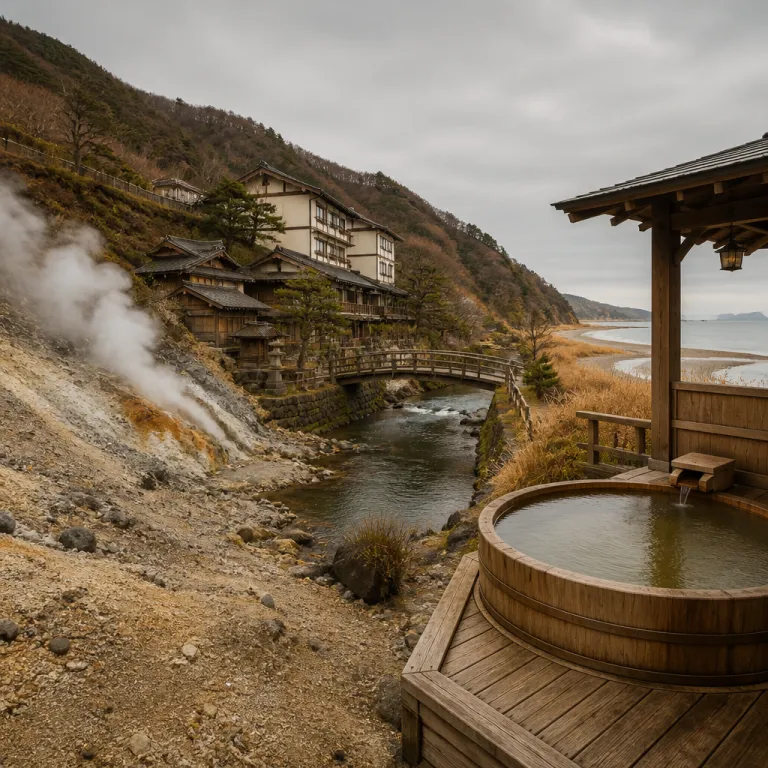
Hokkaido ryokan circuit guide for serious onsen travellers
Think of this hokkaido ryokan circuit guide as a quiet rebuttal to Hakone hype, tracing a clean line through Noboribetsu, Jozankei and Yunokawa for travellers who care more about water quality than lobby florals. The circuit sits across southern hokkaido japan, using efficient public transport and limited express trains to turn three very different hot spring towns into one coherent japan experience that still leaves room for a ski resort detour in niseko or furano. You move between volcanic valleys, river canyons and a windswept island shoreline, and each stop rewards a traveller who reads the onsen menu as closely as any kaiseki course.
Noboribetsu Onsen is the anchor of any serious travel japan itinerary in this region, because its nine distinct hot spring sources make it the department store of mineral waters. Jozankei Onsen, folded into Shikotsu Toya National Park, is the circuit’s urban annex, a place where you can leave central sapporo after lunch and be in a rotenburo by late afternoon. Yunokawa Onsen, on the edge of Hakodate on hokkaido’s southern tip, completes the triangle with a rare seaside hot spring town where the steam rises almost level with the waves.
This hokkaido ryokan circuit guide assumes you are booking premium or luxury ryokan stays, not a generic star hotel near a station that happens to have a communal bath. The properties that matter here treat the onsen as the core product, with water piped directly from source, and they build the rest of the japan travel experience around it, from tatami suites to sharply edited kaiseki that foreground the island’s seafood. Your task is to decide how many nights each town deserves, which seasons match your style, and whether you will fold in ski resorts or national parks between soaks.
Noboribetsu Onsen: reading the nine-source promise
Noboribetsu Onsen sits above a volcanic cauldron, and this hokkaido ryokan circuit guide starts here because nowhere else in hokkaido japan offers nine distinct hot spring types within such a compact park valley. The Jigokudani crater, often called Hell Valley, steams away just beyond town, and the best ryokan quietly pipe different waters from this national landscape into separate indoor baths and open air rotenburo. When you book, you are not just choosing a japanese room category ; you are choosing which mineral compositions you will soak in before dinner and after breakfast.
On a luxury booking platform, study each property’s onsen section as closely as the room photos, because some ryokan use multiple sources while others rely on a single hot spring line. Look for explicit notes on free flowing water, temperature control and whether the baths are rotated between genders by the hrs mins, since that affects how many pools you will actually experience in one night. A serious hokkaido ryokan circuit guide should also flag tattoo policies, because “Are tattoos allowed in onsen?” and “What should I bring to an onsen?” are not abstract questions when you have one night and nine waters to sample.
Noboribetsu works in every season, but the town feels particularly honest in january february when snow banks mute the neon and the air is brutally hot and cold at once. Winter travellers often pair a night here with a ski day at a nearby ski resort, using limited express trains from sapporo station or asahikawa station to move between slopes and steam. If you prefer shoulder season, spring and autumn frame Jigokudani and the surrounding national parks in softer colours, and the contrast between the cool air and hot springs becomes the main event rather than the famous sapporo snow festival crowds further north.
Solo travellers should pay attention to rate tables, because some Noboribetsu ryokan still add weekend surcharges for single occupancy, while others quietly welcome solo bookings at near parity with couples. A good luxury booking website will surface these policies clearly, saving you from awkward email exchanges in formal japanese. When you see a ryokan that combines multiple hot springs, flexible solo plans and a clear english onsen guide, you have found the kind of property that justifies crossing half an island for one night.
For context on how high yield tourism is reshaping availability and pricing, it is worth reading this analysis of how Japan’s high yield pivot is changing which ryokan you can actually book. It explains why some Noboribetsu addresses now hold back rooms for international guests while others lean into domestic loyalty, and that nuance matters when you are planning a tight hokkaido japan circuit. In practice, the earlier you secure your Noboribetsu night, the more freedom you will have to shape the rest of your travel.
Jozankei Onsen: sapporo’s canyon retreat for short stays
Jozankei Onsen is where this hokkaido ryokan circuit guide becomes realistic for travellers who only have a few nights in hokkaido but still want a credible onsen stay. The town sits in a river canyon inside Shikotsu Toya National Park, yet it is only about 30 to 40 hrs mins by bus from central sapporo depending on traffic and exact departure point. That proximity means you can treat Jozankei as an extension of the city, using it as a soft landing after a long flight or as a final exhale before a limited express train south.
The scale here is different from Noboribetsu ; Jozankei is the largest hot spring town in hokkaido, and it draws around 1,400,000 visitors each year according to the national tourism board. That number sounds heavy, but the canyon setting and the spread of ryokan along the river keep the experience surprisingly calm outside peak holiday periods. For a solo explorer, the density of properties is an advantage, because competition has pushed several high end ryokan to accept single guests without punitive supplements, especially on weekdays and outside january february ski season.
From a booking perspective, Jozankei is where you can be slightly more flexible, because same week availability is often possible except during the sapporo snow festival when every star hotel and ryokan in the region feels full. Many travellers base themselves in sapporo for food and urban culture, then slip out to Jozankei for one or two nights of hot springs, using public transport rather than rental cars. This pattern works well if you also plan day trips to niseko or furano ski resorts, because you can keep your luggage light and let the limited express network do the heavy lifting.
Seasonality reads differently here than in coastal Yunokawa or volcanic Noboribetsu, because the canyon amplifies colour and temperature. Summer in hokkaido japan rarely climbs above the mid twenties Celsius, so an outdoor rotenburo above the river feels comfortable even at midday, while autumn turns the national park slopes into a dense palette that you will see reflected in the kaiseki garnishes. In winter, snow piles on the rocks below and the contrast between the hot spring steam and the frozen river becomes the defining japan experience for many first time visitors.
If you are curious how other regions balance heritage and modernity, the quiet rivalry described in this piece on Kanazawa’s ryokan triangle offers a useful comparison. Jozankei plays a similar role for sapporo as Kanazawa does for Honshu’s central corridor, giving you a refined alternative to more obvious national hot spring brands. For a hokkaido ryokan circuit guide, that means Jozankei is your flexible middle chapter, the place you can expand or contract depending on how ambitious your island loop becomes.
Yunokawa Onsen: seaside steam and airport logic
Yunokawa Onsen, folded into Hakodate on hokkaido’s southern edge, is where this hokkaido ryokan circuit guide proves its practicality. The town sits only a short drive from Hakodate airport and a quick tram ride from Hakodate station, which means you can land, check into a ryokan and be in a hot spring before your internal clock has fully registered the flight. For travellers who treat time as a luxury, that airport edge is not a footnote ; it is the reason Yunokawa belongs on a tightly plotted japan travel itinerary.
Unlike inland onsen towns, Yunokawa’s best ryokan open their baths toward the sea, so you soak in hot springs while watching ferries move across the bay and planes trace slow arcs overhead. The water here is softer than Noboribetsu’s volcanic brew, but the combination of salt air and steam creates a different kind of japan experience, closer to a maritime retreat than a mountain hideaway. Selected Onsen Ryokan’s recent ranking of Yunokawa among the top ten hokkaido hot spring towns underlines what regulars already know ; this is one of the few places on the island where you can pair a seaside view with serious kaiseki.
Logistically, Yunokawa works beautifully as either the first or last stop on a hokkaido japan loop, especially if you are connecting through Tokyo and want to avoid backtracking. Many travellers now fly into Hakodate, spend one or two nights in Yunokawa, then move north by limited express train toward sapporo, Jozankei and eventually Noboribetsu, turning the island into a clean south to north line. Others reverse the order, ending with Yunokawa so they can wake up, take one last pre flight soak and be at the airport in under 30 hrs mins door to door.
Yunokawa also offers a small but memorable monkey park where Japanese macaques soak in their own hot spring pools, a reminder that these waters are part of a wider ecosystem rather than a purely human amenity. The park is modest compared with larger national attractions, yet it adds a playful note to an otherwise grown up circuit, especially if you are travelling solo and want one light stop between more meditative baths. For some, watching the monkeys lean into the steam becomes as vivid a memory as any star hotel lobby in the city.
If you are interested in how new properties are rethinking forest and seaside settings, the preview of a tunnel connected forest ryokan at this in depth ryokan review offers a useful counterpoint to Yunokawa’s open horizon. Both approaches show how contemporary japanese architects are reframing the relationship between room, bath and landscape. For a hokkaido ryokan circuit guide, the lesson is simple ; choose at least one property where the onsen faces something elemental, whether that is sea, forest or crater.
Season, snow and the Hokkaido kaiseki difference
Hokkaido’s appeal for onsen travellers is not just the water ; it is the way the island’s seasons rewrite the script for both bathing and dining. Peak summer temperatures hover around 22 to 26 degrees Celsius, far cooler than Tokyo’s heavy 33 to 35 degrees, so you can sit in an outdoor bath at midday without feeling punished by the sun. In winter, especially in january february, the same rotenburo become snow framed stages where the steam rises into air that can feel almost painfully clean.
For food focused travellers, this hokkaido ryokan circuit guide should underline how different the kaiseki tables look compared with Honshu standards. Here, sea urchin, hairy crab and scallops are not occasional luxuries but recurring characters, and the best ryokan treat them with a restraint that lets the cold waters of hokkaido japan speak clearly. Even in inland towns like Jozankei and Noboribetsu, the proximity to major fishing ports means your dinner often travelled fewer hrs mins than you did that day by limited express train.
Winter brings its own theatre, especially if you time your sapporo stay with the sapporo snow festival, when ice sculptures and national snow artists turn the city into a temporary gallery. Many travellers pair a night or two in a central sapporo star hotel with a longer ryokan stay in Jozankei, using public transport to shuttle between neon and cedar. The contrast between walking through sapporo snow at night and then sinking into a private hot spring an hour later is one of those experiences japan does better than almost anywhere else.
Outside winter, the national parks that frame this circuit come into sharper focus, from Shikotsu Toya National Park around Jozankei to the wider network of hokkaido national parks that include Shiretoko National Park and its more remote shiretoko national coastline. While these latter parks sit far from the Noboribetsu Jozankei Yunokawa triangle, they matter for context, because they show how volcanic activity shapes both landscapes and hot springs across the island. If you extend your trip, a night near asahidake onsen in the Daisetsuzan range or a detour to a ski resort near asahikawa can turn a simple onsen loop into a more layered japan travel story.
Whatever the season, remember the basics that local tourism boards repeat for good reason ; “Book accommodations in advance.”, “Respect onsen etiquette.”, and “Prepare for varying weather conditions.”. Those lines sound generic until you are standing in a snowstorm outside a fully booked ryokan with only a thin jacket and no reservation. A thoughtful hokkaido ryokan circuit guide is less about poetic descriptions of steam and more about helping you avoid those small, avoidable frictions.
Solo logistics, transit math and when Hokkaido is worth it
For a solo explorer, the hardest part of planning a hokkaido ryokan circuit is not choosing between Noboribetsu, Jozankei and Yunokawa ; it is working out whether the flight time and internal transfers justify the stay length. As a rule of thumb, this hokkaido ryokan circuit guide only really makes sense if you can give the island at least three to four nights, ideally more, so you can amortise the long haul and still feel unhurried between baths. Anything shorter and you risk spending more time in airports and at a station than in hot springs.
Transit is straightforward once you commit, because hokkaido’s public transport network is built for both residents and visitors, with limited express trains linking Hakodate, sapporo and asahikawa in clean arcs. Buses then handle the last kilometres into onsen towns, and the schedules are usually aligned with train arrivals, though you should still check the latest data before you travel. A good luxury booking website will often summarise these connections in plain english, translating local timetables into simple hrs mins estimates between each stop on your circuit.
Solo booking policies remain the one real friction point, especially in peak season when some ryokan still prefer couples or small groups. Noboribetsu can be the toughest for single travellers on weekends, while Jozankei and Yunokawa tend to be more flexible, particularly outside january february and major national holidays. When in doubt, use a platform that lets you filter for single friendly plans and clearly states whether weekend surcharges will apply before you commit your card.
Wellness tourism is rising fast across japan, and “Increased interest in wellness tourism.”, “Growing popularity of onsen experiences among international travelers.”, and “Development of luxury ryokan accommodations.” are not marketing slogans but structural shifts that shape availability. As more travellers seek authentic experiences japan wide, the best ryokan in hokkaido will continue to refine their balance of tradition and modern comfort, from room design to multilingual onsen guides. For you as a guest, that means more choice, but also more need to read the fine print so your carefully plotted island circuit feels as effortless as it looks on the map.
FAQ
What is an onsen ryokan and how does it differ from a regular hotel?
An onsen ryokan is a traditional japanese inn built around natural hot spring baths, usually with tatami rooms, futon bedding and multi course kaiseki dinners included in the rate. A regular hotel, even a high end star hotel near a station, may only offer standard bathrooms or a generic communal bath without true hot spring water. On a hokkaido ryokan circuit, prioritise properties that clearly state their hot springs are sourced from local geology rather than heated tap water.
Are tattoos allowed in Hokkaido onsen ryokans?
Policies vary widely across hokkaido japan, and even within Noboribetsu, Jozankei and Yunokawa you will find different rules at each property. Some ryokan allow tattoos in all baths, others restrict access to private onsen only, and a few still prohibit visible ink entirely in shared facilities. Because “Are tattoos allowed in onsen?” is a common concern, check each ryokan’s policy on your booking website or email in advance rather than assuming leniency.
What should I bring to an onsen during a Hokkaido circuit?
Most ryokan provide yukata robes, towels and basic toiletries, so you mainly need personal items such as skincare, any specific hair products and a change of clothes for travel days. The standard advice remains valid ; “What should I bring to an onsen?” is answered with “Towel, toiletries, and a change of clothes.” by local tourism boards. In winter, add non slip sandals and a warm coat for walking between indoor corridors and outdoor baths, especially in snow bound Noboribetsu or Jozankei.
How many nights should I spend in Noboribetsu, Jozankei and Yunokawa?
If you have a week in hokkaido, a balanced hokkaido ryokan circuit guide would suggest one or two nights in Noboribetsu, two in Jozankei and one or two in Yunokawa depending on your flight pattern. With only three or four nights, choose two towns and give each at least a full day so you can enjoy both hot springs and local walks without rushing. Remember that travel between cities and national parks can eat into your schedule, so always factor in realistic hrs mins for each transfer.
Is it easy to visit ski resorts or national parks from this onsen circuit?
Yes, but you need to plan the sequence carefully, because niseko, furano and asahidake onsen sit on different axes from the Noboribetsu Jozankei Yunokawa triangle. Many travellers base themselves in sapporo or asahikawa for ski days at nearby ski resorts, then add onsen nights before or after in Jozankei or Noboribetsu using public transport and limited express trains. For more remote national parks such as Shiretoko National Park, you will need extra days and possibly a rental car, so they are best treated as a separate chapter rather than a quick add on.