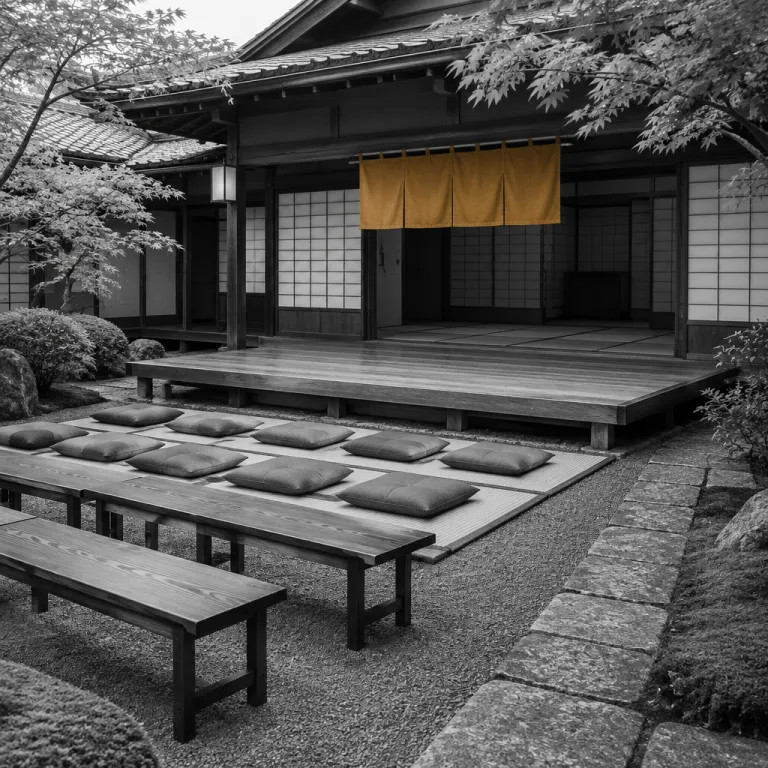
From room key to cultural key: why programming now defines the luxury ryokan
In Japan, the most interesting luxury ryokan stays now hinge on cultural programming rather than thread count. For an executive extending a Kanto–Tokyo business trip, the right hands-on cultural experience can turn one extra night into a concentrated masterclass in Japanese traditions, with every workshop and event curated as carefully as the kaiseki. This shift reflects a wider rise in experiential travel, where staying at a ryokan is less about a pretty room and more about a cultural discovery that feels specific to place and time.
Owners, local artisans, and dedicated cultural coordinators now collaborate as a single équipe to design each experience, using live performances, interactive workshops, and demonstrations that foreground traditional Japanese skills. Their shared objective is clear: enhance guest experience, promote local culture, and quietly encourage longer stays by making that second or third night feel indispensable rather than optional. In a market where the average ryokan occupancy rate has hovered around 60% in recent years, according to surveys by the Japan Tourism Agency and regional hotel associations (for example, JTA “Accommodation Survey” summaries from 2018–2022), the properties that treat programming as seriously as hospitality are the ones turning cultural capital into commercial advantage without sacrificing authenticity.
For the traveler, this means that choosing a ryokan is no longer only about an onsen with perfect hot springs or a room with flawless tatami mats and sliding doors. It is about whether the main building hides an art lobby where a gold leaf artisan works in real time, or a tea ceremony master holds an intimate workshop that connects the ritual to the surrounding nature. The most compelling cultural programs are not generic stage shows but precise encounters with Japanese culture, led by practitioners whose craft is rooted in the region rather than in a marketing deck.
How to tell artisan led programming from tourist theatre
The first test of any cultural session at a ryokan is simple: who is leading it. A genuine workshop on calligraphy, pottery, or tea ceremony should be hosted by a local practitioner or artisan, not a staff member reading a script in hesitant English while the event drifts toward polite pantomime. When the person in front of you can explain how their craft traces back to the Edo period or to a specific valley, the experience stops feeling like a staged event and starts feeling like a private seminar. As one Kyoto-based potter told the Kyoto City Tourism Association in a 2022 interview, “Guests don’t just want a souvenir; they want to understand the hands and history behind it.”
Second, look at access and scarcity: if a cultural event is sold widely to day visitors and coach tours, the signal of exclusivity for in-house guests is diluted. The most compelling formats are often reserved for staying travelers, with limited numbers and clear time slots that encourage you to book in advance and participate actively. When an event ends, you should feel that you have attended something that could not simply be replicated in any main building lobby across Japan, but belonged to that onsen town, that river bend, that cluster of spring baths.
Finally, examine how deeply the programming is woven into the property’s hospitality rather than bolted on as entertainment. At a serious onsen retreat in Kanto–Tokyo or a coastal hot spring enclave, the same guide who walks you through the art in the lobby might also introduce the hot spring source, the surrounding nature, and the traditional Japanese architecture in one coherent narrative. For a sense of how this integration works at its best, look at a property where refined hospitality, private rooms, and hot springs are aligned with cultural immersion, such as an Atami ryokan with onsen and private rooms described in this guide to authentic Japanese luxury in Atami.
Standout ryokan where the stage is set for serious culture
Some properties now function as small cultural campuses, where every corridor and tatami room leads to another facet of Japanese culture. In Takachiho, Ryokan Shinsen has become a benchmark for how a carefully designed program can be both intimate and ambitious, offering private night kagura performances that have been preserved for more than eight centuries and a swordsmith experience with a master craftsman. These are not interchangeable events; they are rooted in local mythology, regional art, and a landscape where nature and ritual have always been intertwined. The ryokan’s own materials and local shrine pamphlets emphasize that performances are conducted in cooperation with shrine communities such as Takachiho-jinja, reinforcing that this is living heritage rather than theatre.
On Shikoku, Anabuki Tei in Takamatsu takes a different route, using gastronomy as its primary cultural guide. Here, a Michelin-trained sushi chef leads nigiri making sessions that function as a Japan-focused workshop in knife skills, rice texture, and seasonality, turning the counter into a classroom where each piece of fish carries a story about coastal travel routes and historical trade. The event may last only a short time, but the memory of shaping rice with a master in a quiet tatami space lingers far longer than any generic tasting menu, and guest reviews on major booking platforms frequently highlight these lessons as the highlight of their stay.
In Kyoto, Higashiyama Shikikaboku layers programming across disciplines: shamisen performances, pottery making, rooftop yoga, and geisha cultural activities unfold between the main building, the art lobby, and intimate studios. This is Kyoto as a living city rather than a postcard, and staying at a ryokan here can be paired with a walk to a garden property such as Kyoto Garden Ryokan Yachiyo, whose timeless Japanese hospitality in Kyoto shows how traditional architecture, sliding doors, and tatami mats can frame both quiet reflection and structured cultural discovery.
When wellness meets heritage: onsen, nature, and the new cultural retreat
Wellness programming at top ryokan has moved far beyond generic spa menus, and nowhere is this clearer than at Bettei Senjuan in Minakami. Here, a Nature Treatment program uses Japanese techniques with seasonal botanicals to create an experience that sits at the intersection of onsen therapy, forest bathing, and traditional Japanese bodywork. The result is a stay where the surrounding nature and hot springs act as co-therapists rather than backdrops, and where wellness is framed as a cultural practice as much as a physical one.
In such places, the hot spring is not just a hot spring; it is a narrative device that connects geology, regional history, and personal restoration. You move from open-air hot springs to indoor spring baths, guided by staff who can explain the mineral composition in clear English while also referencing local folklore and Edo period travel routes. The best guides understand that a guest soaking after a long Kanto–Tokyo meeting wants both silence and substance, so they time their explanations carefully and let the steam and mountain air do most of the talking.
Inside, the architecture supports this wellness-led cultural discovery, with tatami mats underfoot, sliding doors framing views of cedar forests, and an art lobby that might host a workshop on incense or seasonal ikebana. A tea ceremony held after the evening bath becomes more than a ritual; it is a structured pause in time where Japanese culture, hospitality, and nature align in a single room. For a deeper sense of how morning rituals reveal a property’s seriousness, read this analysis of the kaiseki breakfast and how morning is where the serious ryokan reveals itself, then apply the same scrutiny to any wellness program offered.
Booking strategy for executives: choosing the extra night that actually matters
For a business traveler weighing one more night in a glass tower against staying in the countryside, the decision should be made with the same rigor you apply to any major project. Start by mapping your journey through Japan; if meetings cluster in Kanto–Tokyo, look for a ryokan within two or three hours by train where structured cultural programming is central to the offer, not an afterthought. Properties aligned with consortia such as The Ryokan Collection often act as gateways to regional traditions, with cross-property initiatives that turn a single night into a curated itinerary of Japanese culture.
When evaluating options on a luxury booking platform, read beyond the room descriptions and onsen photos. Ask whether the tea ceremony is led by a certified practitioner, whether the art in the lobby is created by local artists, and whether any gold leaf, pottery, or calligraphy sessions are taught by artisans whose work you could later find in regional galleries. A serious property will be transparent about its partners, often collaborating with local cultural centers, tourism boards, and art schools to ensure that each event is anchored in the community rather than in generic entertainment.
Practicalities matter too: check that key sessions are offered in English, that group sizes are small, and that the schedule allows enough time between an evening event and the final hot spring soak before lights out. As a working guideline, many high-end ryokan now cap cultural workshops at around six to ten participants and price intensive sessions in the ¥5,000–¥20,000 range per person, depending on materials and duration. Remember the simple guidance shared with international guests: “Book in advance. Respect local customs. Participate actively in events.” When you treat the ryokan as both stage and classroom, that extra night stops being a discretionary indulgence and becomes the most valuable part of your journey through Japan.
How cultural programming supports the future of the ryokan
Behind the scenes, cultural programming is not just a guest amenity; it is a survival strategy for an industry facing declining occupancy and rising expectations. As experiential travel and interest in Japanese culture grow, ryokan owners, local artisans, and cultural coordinators are working together to design events that both preserve heritage and attract international travelers who might otherwise default to global luxury brands. The expected impact is twofold: a boost in tourism and a deeper layer of cultural appreciation that justifies premium rates and longer stays.
The Ryokan Collection’s curatorial role is particularly significant here, as its 50-plus member properties increasingly share ideas, artisans, and formats for workshop-style programming that can be tailored to each region. A kagura performance in Kyushu, a sushi masterclass in Shikoku, or a pottery session in Kyoto may look different on the surface, yet all are built on the same principles of authenticity, small scale, and practitioner-led instruction. This network effect means that a traveler booking through a luxury platform can rely on a baseline of quality in any cultural experience, whether the setting is a mountain onsen or a riverside main building with a minimalist art lobby.
For guests, the benefit is clear: every carefully designed cultural experience turns the ryokan into a stage where Japanese culture is performed with integrity rather than spectacle. For hosts, each event that ends with guests lingering on tatami mats, asking questions about Edo period customs or local nature, is a sign that the strategy is working. When cultural programming is done well, the line between room revenue and cultural discovery blurs, and the phrase “event ended” feels inaccurate, because the real impact of that workshop continues long after checkout.
FAQ
What is a ryokan and how does it differ from a hotel ?
A ryokan is a traditional Japanese inn with tatami rooms and communal baths. You sleep on futons laid directly on tatami mats, pass through sliding doors instead of corridors of identical doors, and often bathe in natural hot springs rather than standard bathrooms. The hospitality is highly personalized, with kaiseki meals, tea ceremony elements, and curated cultural options that reflect local Japanese culture.
What cultural activities can I expect during a luxury ryokan stay ?
Many luxury ryokan now offer tea ceremony, calligraphy, pottery, music performances, and seasonal festivals as part of a structured cultural experience program. Some properties host artisan-led sessions in gold leaf decoration, kimono dressing, or regional cuisine, while others focus on nature-based activities such as guided walks or meditation near hot springs. The most serious offerings are small scale, practitioner led, and closely tied to the surrounding region’s history.
How should I book and prepare for cultural events at a ryokan ?
Most properties allow you to reserve workshops and performances when you book your room online through official websites or trusted travel agencies. Because places are limited, it is wise to secure key sessions in advance, especially if you need English language guidance or have limited time. On arrival, staff will usually act as your guide, explaining etiquette for the onsen, tatami room, and any cultural event so that you can participate respectfully and comfortably.
Are cultural programs suitable for first time visitors to Japan ?
Yes, well designed cultural programs are ideal for first time visitors, because they compress a wide range of Japanese culture into a single, coherent stay. Practitioners are used to working with international guests and often provide bilingual explanations, making complex traditions such as tea ceremony or Edo period arts accessible without oversimplifying them. For many travelers, a single night of staying at a ryokan with strong cultural programming offers more insight than several days of unguided city travel.
Do cultural activities cost extra when staying at a ryokan ?
Some cultural activities, such as short tea tastings or lobby performances, may be included in the room rate, while more intensive workshops usually carry a separate fee. Properties that take programming seriously will be transparent about pricing and duration, so you can plan your time and budget around the events that matter most. When evaluating value, consider not only the length of the workshop but also the expertise of the artisan and the uniqueness of the cultural discovery it offers.
Sources
Japan Tourism Agency (Accommodation Survey and tourism statistics); World Tourism Organization (reports on experiential travel); Japan National Tourism Organization; Kyoto City Tourism Association interviews with artisans and ryokan managers; regional tourism board interviews with shrine communities and onsen operators.