Why a ryokan stay in Kinosaki onsen defines refined japanese hospitality
Choosing a ryokan in Kinosaki Onsen means stepping into a living gallery of traditional Japanese hospitality. In this compact hot spring town in Hyōgo Prefecture, guests move between wooden facades, willow-lined canals, and glowing lanterns that frame every stay as a calm ritual. The entire town feels designed around the rhythm of baths, kaiseki dinners, and slow evening walks in yukata.
Kinosaki has welcomed travelers to its hot springs for many centuries, and that long history shapes every onsen ryokan you enter. Many ryokans in Kinosaki Onsen still feature tatami rooms, sliding shōji doors, and low tables where seasonal dishes from the Sea of Japan are served in traditional Japanese style. This continuity gives each ryokan Kinosaki stay a depth that modern resorts rarely match, especially when you move from your room to the public baths in just a few minutes on foot through the lantern-lit streets.
The town’s seven public baths are the social heart of Kinosaki, and every Kinosaki ryokan is woven into this network. A typical stay includes a pass for these public baths, so guests can enjoy multiple hot spring experiences beyond their private onsen or indoor spring baths. Kinosaki Onsen maintains seven distinct bathhouses, each with its own layout and atmosphere, from family-friendly facilities to quieter pools favored by regular visitors, and together they shape the rhythm of every stay.
Top luxury ryokans in Kinosaki onsen for a curated premium stay
For travelers seeking the best ryokan Kinosaki options, a handful of historic properties stand out for their balance of heritage and comfort. Yamamotoya Ryokan, set beside the willow-lined river about 8–10 minutes on foot from Kinosaki Onsen Station, has welcomed guests for generations and offers intimate tatami rooms that open onto the quiet townscape. Its hot spring baths are modest in scale yet rich in atmosphere, ideal for travelers who value character over spectacle.
Tsukimotoya Ryokan, with roots in the nineteenth century, offers a more secluded experience while still remaining only a few minutes’ walk from several public baths. Here, rooms are arranged around inner courtyards, and the traditional Japanese-style interiors create a calm retreat after a long day of exploring Kinosaki Onsen. Mikuniya, also known as Kokoro no Yado Mikuniya, is an 11-room onsen ryokan renowned for its free private hot spring baths that can be reserved by staying guests.
Art lovers should consider Ryokan Tsubakino, often called a gallery ryokan because original artworks line its corridors and rooms. Yuraku Kinosaki Spa & Gardens, set within wooded grounds on the edge of town, blends classic tatami rooms with more contemporary spaces and open-air baths that look onto carefully tended gardens. If you are planning a wider hot springs journey across Japan, pairing a Kinosaki stay with a northern itinerary such as the Tohoku snow ryokan corridor creates a compelling contrast between coastal and mountain onsen experiences, especially in winter.
How the seven public baths shape every ryokan experience in town
Staying in any Kinosaki ryokan means you are never far from the town’s seven public baths, which are the core of daily life here. Each hot spring bathhouse has its own character, from cave-like interiors to open-air pools framed by rocks and pines. Because the town is compact, most ryokans in Kinosaki are only a few minutes’ walk from at least one public bath, and many provide a free shuttle for guests who prefer not to walk in colder months.
Every ryokan Kinosaki stay typically includes a pass that grants free access to all seven public baths, encouraging guests to sample different hot springs throughout their visit. Some travelers start with the nearest onsen Kinosaki bath in the early evening, then wander further along the canal to try another public bath after dinner. Others prefer to alternate between their ryokan’s private onsen and the larger public baths, using the town’s spring baths as a way to experience different water temperatures and atmospheres.
To understand how these seven bathhouses structure the town, it is worth reading a detailed walk-through such as the guide to Kinosaki’s seven bath walk. This kind of resource helps guests plan which hot spring to visit at different times of day, whether they prefer quieter morning baths or livelier evening scenes. The result is that your onsen ryokan becomes both a base and a gateway, connecting your private room to a network of shared hot springs that define Kinosaki Onsen, including popular bathhouses such as Satono-yu near the station, Goshono-yu with its mountain views, and Kono-yu beside the temple approach.
Choosing the right room type and bath style for your stay
Selecting the right room in a ryokan Kinosaki property is central to shaping your experience. Traditional Japanese-style rooms feature tatami flooring, futon bedding, and low tables, while some ryokans now offer hybrid rooms with Western beds for guests who prefer a softer mattress. When you check availability, pay close attention to whether the room faces the river, a garden, or the town’s streets, as this will influence the mood of your stay.
Bath options vary widely between ryokans in Kinosaki, and understanding them helps you choose the best fit. Some properties offer only shared indoor baths, while others feature open-air hot spring pools, cypress-wood tubs, or stone-lined spring baths that can be reserved as a private onsen. Mikuniya is notable for its free private hot spring baths, which allow couples or families to enjoy the water together without using the larger public baths.
Luxury-focused travelers often prioritize rooms with in-room hot springs, where a private bath is fed directly by the local hot spring source. These rooms tend to be limited in number, so it is wise to view booking calendars early and secure your preferred dates well in advance. If you are interested in comparing how different properties integrate nature into their design, the forest-focused project described in this tunnel-connected forest ryokan feature offers a useful reference point for understanding how open-air baths and wooded views can transform a simple hot bath into a layered sensory ritual.
Rituals, etiquette, and cultural depth in Kinosaki’s onsen ryokans
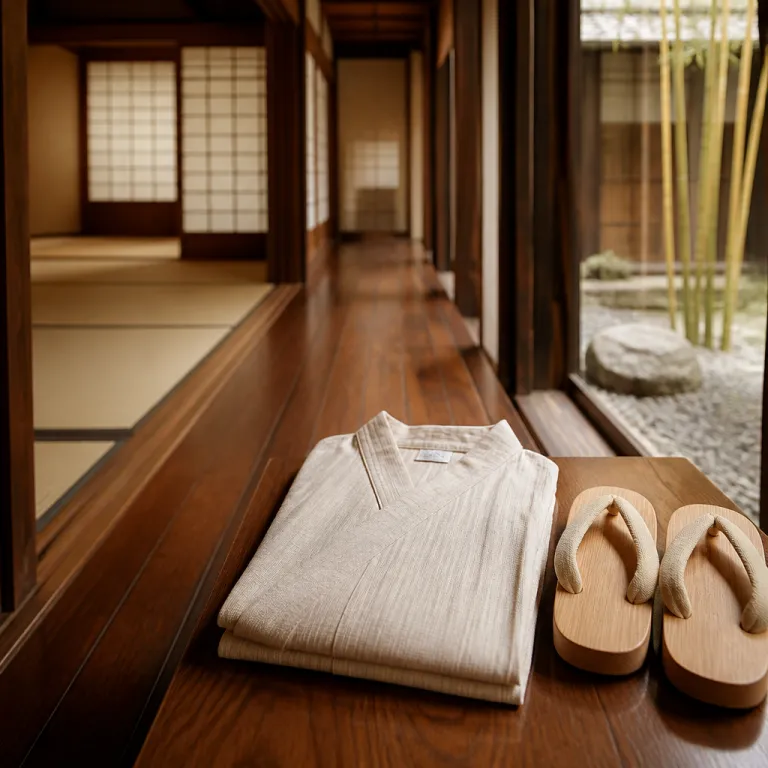
Part of what makes any stay in a Kinosaki ryokan memorable is the choreography of rituals that frame each day. On arrival, guests usually change into a light cotton yukata and wooden geta sandals, then step out into the town to begin their hot spring walk. Guests are encouraged to wear yukata and geta while strolling the town, and the soft clack of wooden sandals on stone has become one of Kinosaki’s most distinctive evening sounds.
Before entering any hot spring bath, whether in your onsen ryokan or one of the public baths, you must wash thoroughly at the shower stations, then soak quietly without splashing. The water in Kinosaki’s hot springs is naturally hot, so short intervals in the bath followed by cool-down breaks are recommended, especially for first-time guests. Many ryokans provide clear instructions in English and Japanese, which helps international visitors feel confident about etiquette from the first bath.
Evening meals are another highlight of a ryokan Kinosaki stay, often served as multi-course kaiseki dinners featuring local crab, Tajima beef, and seasonal vegetables from the region around the town. These meals are usually served in your room or in a private dining space, reinforcing the sense of calm and privacy that defines the best ryokans in Kinosaki. By the time you return from a final late-night walk past the lantern-lit canal and perhaps a visit to Kinosaki Onsenji Temple on the hillside, your futon will be laid out, and the room will feel like a quiet cocoon above the hot springs.
Planning, booking, and comparing premium ryokan options in Kinosaki
When planning a premium stay in Kinosaki Onsen, timing and clarity about your priorities matter more than anything. The town is popular during weekends and holiday periods, so it is wise to check availability several months in advance, especially for rooms with private onsen or open-air baths. Many Kinosaki ryokan properties offer multilingual booking interfaces, making it straightforward to view booking details, compare room sizes, and confirm whether a free shuttle is available from Kinosaki Onsen Station.
Luxury travelers should start by deciding whether they value historical depth, culinary focus, or spa facilities most. Yamamotoya Ryokan and Tsukimotoya Ryokan appeal to guests who want a deeply traditional Japanese atmosphere in the heart of town, while Yuraku Kinosaki Spa & Gardens suits those who prefer more space and garden views. For travelers who prioritize exclusive spring baths, Mikuniya’s free private hot spring baths and the refined facilities at Nishimuraya Honkan are strong contenders among the best ryokans in Kinosaki.
Because Kinosaki is compact, even ryokans located slightly away from the central canal are usually only a few minutes’ walk from at least one public bath or hot spring facility. This means you can choose a quieter location without sacrificing access to the town’s hot springs network and public baths. By approaching your ryokan Kinosaki booking with a clear sense of your preferred room type, bath style, and proximity to the town’s main streets, you can shape an experience that feels both authentically Japanese and precisely tailored to your own pace.
Key figures and context for Kinosaki onsen ryokan stays
- Kinosaki Onsen has welcomed travelers to its hot springs for roughly 1,300 years according to local tourism sources, making it one of Japan’s most historically significant hot spring towns in the region.
- The town maintains seven public bathhouses, a number confirmed by Kinosaki Onsen tourism resources, which allows guests to enjoy a varied bathing circuit during even a short stay.
- Historic ryokans such as Yamamotoya Ryokan, Tsukimotoya Ryokan, and Mikuniya have operated for many decades, illustrating the long continuity of traditional Japanese hospitality in this compact town.
- Most ryokans in Kinosaki offer easy access to the station area, with walking distances often under 800 metres, which keeps transfers between train, town, and hot spring baths simple even for first-time visitors.
FAQ about staying in a ryokan in Kinosaki onsen
What is a ryokan, and how does it differ from other stays ?
A ryokan is a traditional Japanese inn featuring tatami-matted rooms, communal baths, and local cuisine. In Kinosaki Onsen, many ryokans also include access to the town’s seven public baths, yukata rental, and multi-course kaiseki dinners, which together create a more immersive cultural experience than a standard accommodation.
How many public baths can I visit during my stay in Kinosaki ?
Guests staying at most Kinosaki ryokan properties receive a pass that grants access to all seven public bathhouses in town. This means you can try multiple hot spring styles in a single day, from indoor pools to open-air baths, as long as you respect opening hours and basic bathing etiquette.
Is it necessary to book a private onsen room in Kinosaki ?
Booking a room with a private onsen is not essential, because the town’s public baths are central to the Kinosaki experience and are easily reached on foot. However, travelers who value privacy or who are new to Japanese bathing culture often appreciate having at least one private hot spring option within their ryokan.
Do I need to wear yukata outside my ryokan in Kinosaki onsen ?
Wearing a yukata and wooden geta sandals in town is part of the local culture, and most guests embrace it during their stay. While it is not mandatory, strolling between baths in yukata helps you blend into the relaxed rhythm of the town and makes moving between your room and the hot springs more comfortable.
When should I book my ryokan in Kinosaki for the best availability ?
For popular periods such as weekends, national holidays, and peak seasonal events, it is advisable to check availability and confirm your ryokan Kinosaki reservation several months in advance. This is especially true if you want specific room types, such as river-view suites, open-air baths, or limited private onsen facilities.