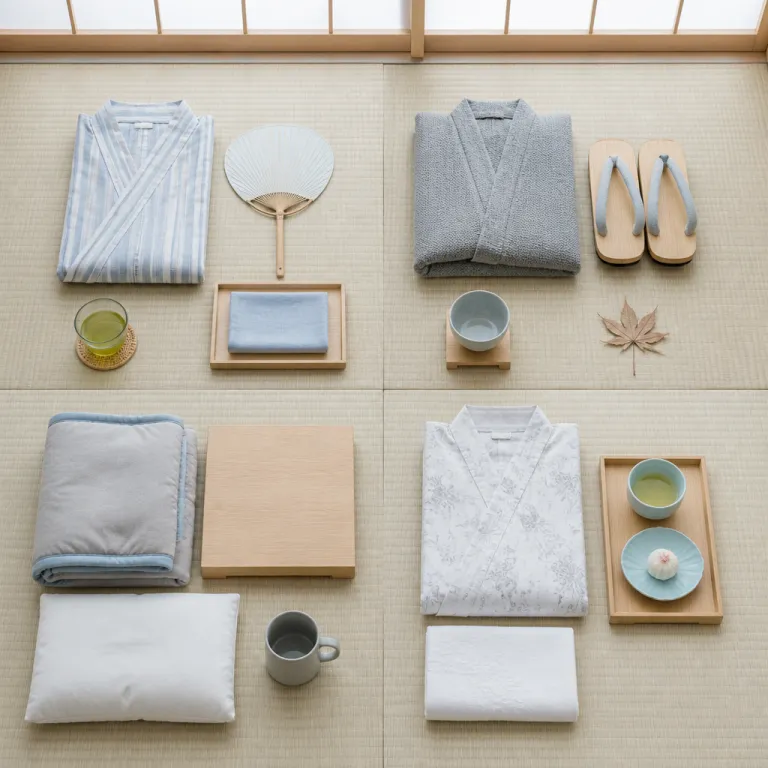
Reading a ryokan room as a seasonal calendar
A Japanese ryokan room is not a static box but a living calendar that quietly tracks the seasons in Japan. When you plan your booking, understanding how ryokan seasonal room changes in Japan work will shape the kind of stay and experience you actually reserve. The same tatami room can feel like four different rooms across the year, and a thoughtful traveler who wants to experience ryokan life more than once will generally plan repeat visits around this subtle transformation.
In a traditional Japanese ryokan, the architecture stays still while the layers of fabric, light, and sound shift with time. The staff will adjust shōji screens, futon thickness, and even the hanging scroll in the tokonoma so that the room will echo the weather outside and the rhythm of your travel in Japan. When you compare ryokans on a luxury booking platform, look beyond the photos of the onsen bath and ask how the rooms are reconfigured between spring, summer, autumn foliage, and the coldest months.
For a solo traveler, this matters because a ryokan stay is built around the room as a stage for meals, sleep, and quiet onsen hot spring recovery. You might book the same room number twice and find that the ryokan will present it as a breezy open air pavilion in one season and as a cocoon around a hot kotatsu table in another. Thinking of ryokan seasonal room changes in Japan as a four act performance helps you decide when to travel, which ryokan offer best matches your style, and how many nights to stay.
Summer natsuzashiki: reed blinds, open air and the sound of water
In high summer, many Japanese ryokans transform their main rooms into natsuzashiki, literally summer rooms designed to cool the body and slow the mind. Sudare reed blinds replace heavier fabrics, sliding doors are pulled wide or even removed, and the room will open toward the garden so that air, insects, and the faint sound of a hot spring stream become part of the composition. When you travel Japan in this season, a natsuzashiki style room can feel like a private onsen terrace even before you reach the bath.
The tatami remains the same, but cushions become thinner, bedding is folded away earlier, and the staff will often place a low table where the breeze moves best. In some Japanese style rooms, fusuma panels are rearranged so that cross ventilation works with the open air engawa corridor, and the ryokan will generally schedule your onsen hot bath times to avoid the hottest hours. A refined luxury property may offer both traditional Japanese and western style sleeping options in summer rooms, yet the core experience ryokan guests remember is the sensation of wind on bare feet and the scent of rush grass.
When you make a booking on a premium platform, look for language about summer kaiseki meals served close to the veranda and about natsuzashiki specific amenities such as fans, yukata, and seasonal local cuisine. These details signal that the ryokan offer is not just about an onsen hot spring but about a curated summer room experience that respects climate and tradition. If ryokan seasonal room changes in Japan matter to you, ask whether the same category of rooms faces a river, a courtyard, or a mountain, because the soundscape will define your summer stay.
Autumn and spring: shifting scrolls, cherry blossom and garden light
Between the extremes of heat and snow, Japanese ryokan rooms enter their most visually expressive seasons, when the garden view becomes the main design element. In autumn, fabrics grow heavier, the hanging scroll in the tokonoma changes to motifs of autumn foliage, and the room will frame the outside world like a painting that evolves hour by hour. During spring, the same room softens again, shōji are adjusted to invite pale light, and fresh ikebana replaces dried arrangements so that cherry blossom or new maple leaves echo the landscape beyond the glass.
For a solo traveler planning to travel Japan twice, one ryokan stay in spring and another in late autumn can feel like two different properties. The staff will subtly retune the room layout, shifting the table angle so that you face either a cascade of cherry blossom or a hillside of red and gold trees while you enjoy multi course meals of local cuisine. This is where ryokan seasonal room changes in Japan become most poetic, because the same tatami, the same walls, and the same onsen baths support entirely different emotional tones.
Luxury booking sites that understand traditional Japanese hospitality will highlight these transitions with room by room photography and clear notes on seasonal menus. When you compare rooms, read how the ryokan will handle futon placement, whether a private onsen is oriented toward the garden, and how the ryokan curfew aligns with your desire to photograph dawn mist or evening lanterns. If you care about materials, you can deepen your research with guides to tatami and flooring elegance, such as the analysis of refined Japanese stay design on ryokan flooring elegance for a refined Japanese stay, then match that knowledge to the season you prefer.
Winter contraction: kotatsu, thick futon and inward facing comfort
When temperatures drop, the same Japanese style room that once breathed with open air suddenly contracts inward, becoming a winter cocoon. Fusuma doors slide shut, a kotatsu table appears with a quilted skirt, and the ryokan will layer thick futon and extra blankets so that the room will hold warmth like a teahouse in the snow. Outside, onsen hot springs steam in the cold air, but inside, the focus shifts from garden views to the quiet ritual of tea, reading, and slow recovery between baths.
For many repeat guests, this is the season when a Japanese ryokan feels most intensely traditional, because the contrast between the icy engawa corridor and the heated kotatsu is so sharp. The staff will time your onsen hot bath slots so that you can move from an open air rotenburo back to a room already warmed, and winter kaiseki meals lean into rich local cuisine that supports the body after long soaks. On a luxury booking platform, look for winter specific notes such as snow views from private onsen tubs, insulation details in rooms, and whether the ryokan curfew is strict, because that affects how you pace your evening between hot springs and futon.
From a booking strategy perspective, winter is when ryokan seasonal room changes in Japan are easiest to feel in your bones. The same category of rooms that felt expansive in summer now feels intimate, and the ryokan will generally emphasize interior craft, from lacquer trays to the grain of the low table. If you want to experience ryokan life as a cycle, consider reserving the same room number in winter after a spring visit, so that you can sense how the architecture holds both cherry blossom light and deep snow silence.
Behind the scenes: the nakai, timing and booking for four lives
The quiet magic of ryokan seasonal room changes in Japan depends on the nakai, the attendants who move through rooms between check out and check in. In a well run Japanese ryokan, the staff will reconfigure an entire floor in a few hours, swapping textiles, changing scrolls, adjusting lighting, and preparing onsen bath amenities so that each new guest meets the correct season the moment they slide the door. This is not decoration for decoration’s sake but a continuation of traditional Japanese hospitality, where the room will mirror the mountains, rivers, and hot springs outside.
For a solo traveler using a luxury booking website, understanding this backstage work helps you read property descriptions with more precision. When a ryokan offer mentions seasonal kaiseki, ask how the rooms shift alongside the meals, and whether private onsen suites receive different arrangements from standard rooms. Some ryokans emphasize western style beds alongside tatami seating, while others keep the experience ryokan pure with futon only, so your booking choices will shape how fully you feel the four lives of the room.
From a practical standpoint, align your travel Japan plans with the specific seasonal identity you want from your ryokan stay. If you crave open air breezes and the sound of water, choose late spring or high summer and confirm that the ryokan will generally open the veranda and use reed blinds; if you prefer kotatsu warmth and inward focus, aim for deep winter and ask about heating, futon thickness, and any ryokan curfew that might affect late night onsen sessions. Over multiple visits, you will start to think of one room not as a single product but as four distinct stays, each shaped by the same walls, the same hot springs, and the same attentive équipe of staff.
Design, nature and choosing your ryokan as a solo explorer
For independent travelers, the most rewarding way to experience ryokan culture is to treat the room as a lens on Japanese nature rather than just a place to sleep. Seasonal design choices, from natsuzashiki layouts to winter kotatsu, are not marketing gestures but a way of aligning your body with the climate, the hot spring water, and the local cuisine served in your room. When you use a premium booking platform, filter not only by onsen type and meal plan but also by how clearly each property explains its seasonal room philosophy.
Some ryokans in Japan lean into dramatic open air rotenburo baths and private onsen suites, while others focus on quietly perfect rooms where the staff will choreograph every futon fold and scroll change. As a solo guest, you can use this to your advantage by planning a sequence of stays that lets you experience ryokan life across at least two seasons, perhaps spring cherry blossom in a riverside inn and autumn foliage in a mountain retreat. Over time, you will learn which style suits you best, whether a more western style bed with tatami seating or a fully traditional Japanese layout where the room will transform completely between day and night.
Ultimately, ryokan seasonal room changes in Japan reward curiosity and repeat visits rather than one time bucket list travel. The more you pay attention to how rooms, meals, and hot springs respond to weather and light, the more your booking decisions will feel like curating a personal calendar of Japanese experiences. For a solo explorer who values nuance, that is the real luxury: not just a beautiful room, but a room that lives four lives and invites you back to meet each one.
FAQ
How different is the same ryokan room between winter and summer ?
The same ryokan room can feel radically different between winter and summer because the layout, textiles, and even lighting are adjusted to match the season. In summer, you may find reed blinds, open doors, and a focus on airflow, while in winter the room contracts around a kotatsu, thick futon, and closed fusuma to retain warmth. If you value these contrasts, consider booking the same room number in two seasons to feel how the space lives multiple lives.
Should I choose a private onsen room or use the shared baths ?
A private onsen room offers maximum privacy and is ideal if you are shy about communal bathing or want flexible soaking times. Shared onsen baths, especially open air rotenburo, often provide the best views and a stronger sense of traditional Japanese culture. Many solo travelers choose a property with both options, using the shared hot springs at quiet times and retreating to a private tub when they want solitude.
How does season affect the meals served in my room ?
Season strongly shapes kaiseki meals, which are built around local cuisine at its peak freshness. In spring you might see delicate mountain vegetables and light broths, while autumn brings richer flavors that echo the changing leaves outside your room. When booking, read the seasonal menu notes carefully, because they often reveal how seriously the ryokan treats the connection between food, room design, and the surrounding landscape.
What is a ryokan curfew and will it affect my stay ?
A ryokan curfew is a set time when the main entrance is locked and public areas, including some onsen baths, may close for the night. It exists so staff can prepare rooms, clean hot springs, and maintain a quiet atmosphere for sleeping guests. If you plan late night walks or long soaks, check the curfew time before booking and choose a property whose schedule matches your habits.
Is a ryokan suitable for a solo traveler who prefers western style beds ?
Many ryokans now offer a mix of western style beds and traditional tatami rooms, sometimes within the same property. As a solo traveler, you can select a hybrid room that combines a bed with Japanese style seating, allowing you to enjoy kaiseki meals, onsen baths, and seasonal room changes without sleeping on a futon. Use booking filters and room descriptions carefully, because the bed type is usually specified in detail on quality luxury platforms.