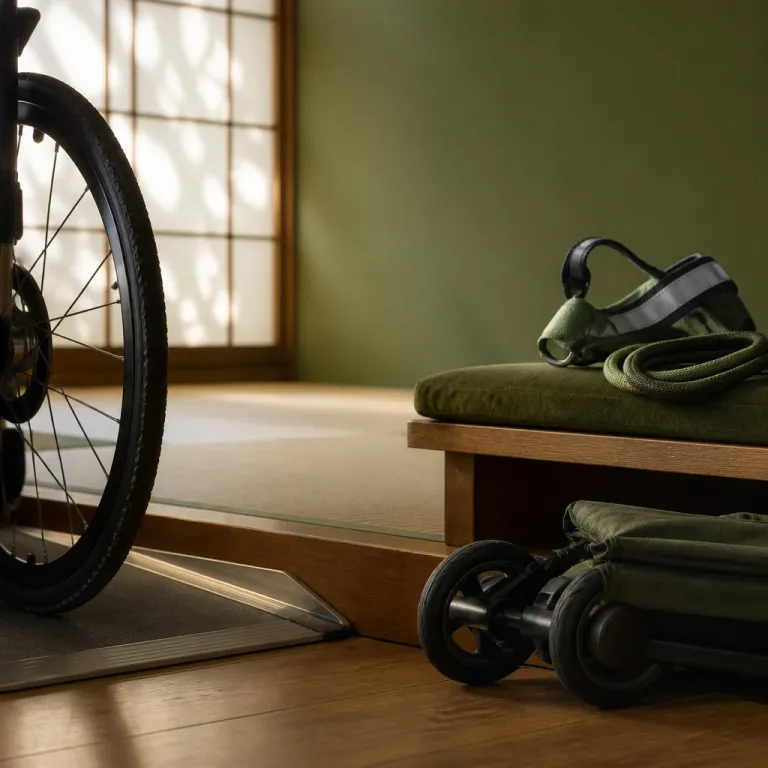
Rethinking the “accessible ryokan japan wheelchair barrier free” promise
Booking what looks like an accessible ryokan in Japan for wheelchair users, strollers, or service dogs demands more than ticking a single “barrier free” box. Many traditional ryokan buildings were designed for a very specific body moving barefoot across raised tatami, stepping up and down between each room and bath zone. To turn that heritage into genuinely accessible travel, you need to interrogate every step, every floor change, and every threshold between the street and the onsen.
Across Japan there are an estimated 50 000 ryokan, yet only a fraction offer a truly wheelchair accessible guest room with step free access from arrival to room bath and on to any accessible onsen. The structural reality is simple ; most properties are multi story wooden houses with narrow corridors, sliding doors, and a genkan entrance that requires a literal step up from the public street into the private world of the inn. When you read “accessible room” or “wheelchair friendly” on a booking site, you must translate that into precise questions about ramps, elevators, and the exact height of each step.
Think of accessibility as a chain that runs from station platform to futon, and from shower chair to hot spring edge. If any link breaks — a single unexpected step into the public bath, a too narrow turn into the accessible bath, a missing grab bar beside the toilet — the entire stay becomes compromised for wheelchair users and families managing mobility aids. A credible luxury booking platform for accessible Japan must therefore map each accessible room, each private bath, and each public bath with room level specificity rather than vague promises.
Tokyo and Kyoto: how to read accessibility between the lines
Tokyo and Kyoto are where most international guests start to travel Japan, and both cities now feature a small but growing cluster of ryokan that take accessibility seriously. In central Tokyo, newer properties sometimes integrate a ground floor accessible room with a wider entrance door, a Western style bed instead of futon on the floor, and a private bath with roll in shower and fixed grab bars. Yet even in these accessible rooms, you must confirm whether the route from the lobby to the guest room is genuinely step free or interrupted by a single, unmarked step at the corridor turn.
Kyoto’s historic machiya style ryokan often sit behind a narrow street façade, with a sharp step from public pavement to private interior and another step between tatami rooms. A few forward thinking owners now advertise wheelchair accessible rooms, but that phrase can mean anything from “we can move furniture to make space” to “we installed a full accessible bath with shower chair and handrails”. When you plan accessible travel in Kyoto, ask for floor plans, photos of the room bath, and written confirmation that the path to any accessible onsen or hot spring facility is barrier free from your door.
Seasonality matters too, especially for families juggling strollers, mobility devices, and service dogs in busy corridors. During national holiday peaks, even a theoretically accessible Japan itinerary can become stressful when public spaces clog and elevators fill, so consider shoulder season stays and study crowd patterns using detailed guides such as this analysis of Silver Week and post typhoon booking windows. In both Tokyo and Kyoto, the most reliable luxury experiences for wheelchair users are still those where the ryokan can name a specific accessible room number, describe its accessible bath fixtures, and explain exactly how staff will assist at each step of your travel.
Onsen, hot springs, and the reality of accessible bathing
The emotional heart of a ryokan stay is the onsen, yet this is also where accessibility often fails guests who rely on a wheelchair or have limited balance. Traditional public bath layouts assume that every body can sit on a low stool, stand to rinse, then step over a high ledge into the steaming hot spring pool. For wheelchair users and many older travelers, that single ledge or slippery step is the difference between a transcendent soak and watching from the tatami while others bathe.
When you evaluate an accessible ryokan in Japan for its bathing options, separate three zones in your mind ; the private bath in your guest room, any semi private onsen that can be reserved by the hour, and the shared public bath. A genuinely accessible bath in a private space will usually offer a roll in shower area, a stable shower chair, horizontal grab bars at two heights, and a low threshold or step free transition into a soaking tub. In contrast, many so called wheelchair friendly public baths still require a step up from the changing room floor, then a step down into the hot spring pool, which makes them unusable for many guests.
Families booking premium stays should look for properties that advertise a specific accessible onsen or private bath that can be reserved for exclusive use, especially when traveling with children who need privacy and time. Some of the most refined examples appear in hot spring regions such as Hakone, where certain properties now combine river facing accessible rooms with lift equipped rotenburo and detailed bathing guidance ; for a curated overview of high end private onsen options, study this guide to the most refined private onsen in Hakone. Always ask whether staff can provide a portable shower chair or transfer bench if the room bath is not fully adapted, and confirm whether service dogs are allowed in the bathing anteroom even if they cannot enter the water area itself.
Room by room: what an inclusive premium ryokan stay looks like
Inside the guest room, the difference between a token accessible label and a truly inclusive space is measured in centimeters and clear floor area. A well designed accessible room will offer at least 90 centimeters of clearance at the entrance, a flat or ramped threshold, and enough turning radius for a wheelchair between the bed, the low table, and the route to the room bath. For families, interconnected accessible rooms or a free room upgrade to a larger corner layout can transform a tight squeeze into a calm base.
Bathroom design is where luxury and accessibility either align or collide. In the best accessible rooms, the toilet sits at a comfortable transfer height with grab bars on both sides, the sink is open underneath for wheelchair access, and the shower zone is fully step free with a fixed and handheld shower plus a sturdy shower chair. When a ryokan claims to offer an accessible bath, ask whether the tub has a side door, a lowered rim, or at least a stable transfer platform, because a deep Japanese soaking tub with a high edge can be impossible to use safely without adaptation.
Sleeping arrangements also matter for wheelchair users, older guests, and parents managing night time care. Many traditional ryokan still place futon directly on the tatami floor, which can be challenging for transfers, so ask whether the property can provide raised bed frames or a Western style bed in at least one accessible room. On a specialist booking platform, look for room descriptions that specify bed height, floor surface transitions, and whether staff can rearrange furniture to create a clear, step free path from door to window and from bed to private bath.
From station to steam: planning accessible travel days
Accessibility does not start at the ryokan door ; it begins when you plan how to travel Japan with a wheelchair, stroller, or service dog from the first airport arrival. Major rail hubs in Tokyo and Kyoto now offer elevators, tactile paving, and accessible public restrooms, but the last kilometer from station to ryokan can still involve steep slopes, narrow pavements, or unexpected steps at alley corners. Before you confirm any booking, map the route on street view, then email the property to ask whether they can arrange an accessible taxi or provide detailed walking directions that avoid stairs.
Once you reach the property, the choreography from curb to guest room is crucial. Ask whether staff can meet you at the entrance to manage luggage, hold doors, and guide you over any unavoidable step with a portable ramp, and confirm whether there is a lift or only stairs between floors. For wheelchair users and families with strollers, a ground floor accessible room with direct, step free access from the lobby is usually worth more than a higher category room with a better view but multiple changes of level.
Some ryokan now publish explicit accessibility statements that outline which rooms are wheelchair accessible, which baths are barrier free, and what equipment is available on request, from shower chairs to portable grab bars. When a property cannot provide this level of detail, a specialist platform such as Ryokan Stay can fill the gap by offering verified, room level accessibility data and honest commentary on trade offs ; see, for example, the way this review of an oceanfront ryokan escape at Atami Sekaie balances hot spring drama with practical access notes. Treat each travel day as a sequence of micro steps, and choose properties that help you smooth every transition from train seat to onsen bench.
What to ask before you book: a script for families and wheelchair users
Clarity begins with the questions you ask, and a premium booking website should equip you with a precise script. Start with the basics ; “Is there at least one fully wheelchair accessible guest room, and is the route from entrance to that room completely step free, including any thresholds or slopes ?” Then move to bathing, asking whether there is a private bath or accessible onsen that can be reserved, whether the public bath has any steps, and whether a shower chair and fixed grab bars are installed as standard rather than brought in ad hoc.
Dietary and language accessibility are the next frontier for inclusive Japanese hospitality. When you book kaiseki dinners, ask whether the ryokan can provide multilingual menus, allergy safe alternatives, and options for halal, vegetarian, or vegan guests without compromising the integrity of the meal, and confirm whether staff can explain textures and ingredients in English. For families, it is worth asking whether children can eat slightly earlier in a private room, whether high chairs are available, and whether the property can adapt dishes for sensory sensitivities while still honoring seasonal Japanese produce.
Service dog policies remain inconsistent across Japan, so always request written confirmation that your animal is welcome in the guest room, in corridors, and in at least part of the dining area. You should also ask about public space rules, such as whether the dog can accompany you to the changing area outside the public bath even if it cannot enter the wet zone, and whether staff have experience supporting guests with guide dogs or medical alert animals. As one official guidance puts it, “Are ryokans wheelchair accessible? Some are; confirm accessibility before booking.”
Heritage, innovation, and the future of inclusive ryokan stays
The most exciting work in accessible Japan hospitality now happens where centuries old architecture meets universal design thinking. Properties such as Ryokan Ohana in Yanagawa, Fukuoka, which received the Japan Travel Awards Grand Prix for inclusive heritage, show that it is possible to respect a 400 year old estate while carving out step free routes, installing discreet lifts, and creating accessible rooms that still feel unmistakably Japanese. These pioneers prove that wheelchair accessible design, service dog policies, and family friendly layouts can coexist with tatami, shoji, and the quiet drama of a lantern lit corridor.
Innovation is not limited to ramps and rails ; it also includes digital transparency and booking tools that surface accessibility as a primary filter rather than a footnote. A serious luxury platform for ryokan should allow you to search specifically for accessible rooms with private bath, to see whether each public bath is barrier free, and to understand which guest room categories can accommodate a wheelchair, stroller, or portable hoist. When that data is combined with honest narrative reviews that describe the feel of each floor surface, the width of each step, and the temperature of each hot spring, families can plan accessible travel with the same confidence as any other itinerary.
Pet friendly policies, including dog friendly rooms at brands such as KAI Miyajima, hint at a broader shift toward inclusion that will eventually benefit wheelchair users and parents with young children. As more owners recognize that accessibility is not a niche request but a core part of Japanese hospitality, we can expect to see more accessible baths, more clearly labeled accessible rooms, and more staff trained to guide guests through every step of the stay. For now, the most reliable strategy is to combine a specialist booking site, direct communication with the ryokan, and a detailed personal checklist that covers room, bath, onsen, and every public space you plan to cross.
Key figures on ryokan accessibility and travel in Japan
- Japan hosts an estimated 50 000 ryokan establishments across the country, according to the Japan Ryokan Association, which means that even a small percentage shift toward accessible rooms translates into thousands of potential stays for wheelchair users and families.
- The average ryokan room rate is around 15 000 Japanese yen per night, based on Japan Tourism Agency data, so adding an accessible bath or grab bars is a relatively modest investment compared with the long term revenue from inclusive travel segments.
- Check in at many traditional ryokan typically begins around 15.00, with dinner served from about 18.00 and onsen hours starting near 19.00, which makes it essential for guests with mobility needs to plan arrival and bathing times to avoid crowded public baths and narrow corridors.
- Industry observers note a steady increase in international visitors choosing ryokan over standard hotels, which places new pressure on owners to provide wheelchair accessible rooms, step free routes, and multilingual accessibility information as part of their core offering.
- Modernization trends within the sector now focus on integrating contemporary amenities such as elevators, accessible onsen facilities, and private baths into traditional wooden structures, balancing cultural preservation with the practical demands of accessible travel.
FAQ: accessible ryokan stays for wheelchairs, strollers, and service dogs
What is a ryokan, and how does it differ from a standard hotel ?
A ryokan is a traditional Japanese inn that centers on tatami floored rooms, kaiseki dinners, and communal onsen bathing rather than standardized hotel corridors and identical rooms. Guests usually remove shoes at the entrance, wear a provided yukata robe, and follow onsen etiquette in shared baths. This format creates a rich cultural experience but also introduces steps, floor level changes, and bathing rituals that can challenge wheelchair users without thoughtful adaptation.
Are most ryokan in Japan wheelchair accessible ?
Only a minority of ryokan currently offer fully wheelchair accessible rooms with step free routes from entrance to bath, because many buildings are historic wooden structures with raised genkan entrances and no elevators. Some properties have created at least one accessible room on the ground floor, sometimes with a private bath and grab bars, but the level of adaptation varies widely. Travelers should always request detailed accessibility information, including photos and measurements, before confirming any booking.
Can I bring a service dog to a ryokan ?
Policies on service dogs differ by property, and there is no single nationwide standard for ryokan. Some owners welcome certified guide dogs and medical alert animals in guest rooms and public corridors but may restrict access to dining rooms or bathing areas, while others are still adapting their rules. The safest approach is to ask for written confirmation of where your service dog can go and what documentation is required before you travel.
How can I check whether the onsen and baths are accessible ?
The most reliable method is to ask the ryokan for photos and diagrams of the route from your room to each bath, noting any steps, slopes, or narrow doors. You should also ask whether there is a private bath or accessible onsen that can be reserved, whether the public bath has handrails and non slip flooring, and whether a shower chair is available. Specialist booking platforms that verify accessibility on site can provide an extra layer of assurance.
What etiquette should wheelchair users and families follow at a ryokan ?
Etiquette expectations are the same for all guests ; remove shoes at the entrance, wear the provided yukata in public areas if you wish, and follow onsen rules such as washing thoroughly before entering the hot spring. If you use a wheelchair or stroller, staff will usually guide you on where to park it near the bathing area and how to move safely on wet floors. Communicating your needs clearly at check in helps the team anticipate support while maintaining the calm atmosphere that defines ryokan hospitality.