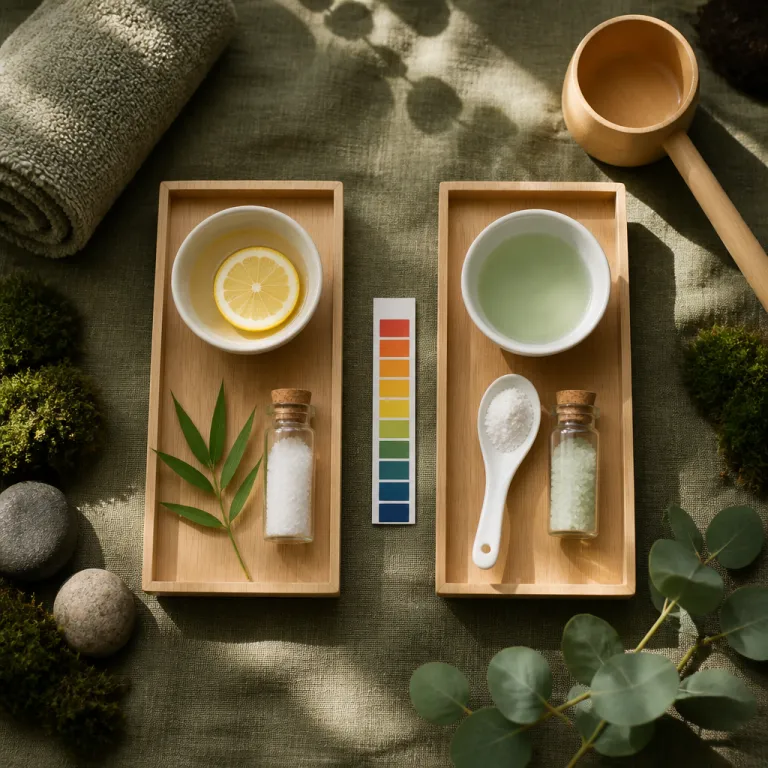
Onsen water pH in Japan: why it matters more than the mineral list
Why onsen water pH in Japan matters more than the mineral list
When you book a luxury ryokan, you probably scan photos of steaming hot springs and serene rotenburo before anything else. Yet for onsen water pH in Japan, the single detail that most changes how the bath will feel on your skin is usually printed in tiny characters on a wall. Think of pH as the quiet architect of your soak, shaping every sensation from the first step into the spring water to the way your skin feels under the yukata later.
Most booking sites highlight the hot spring minerals — calcium, magnesium, hydrogen carbonate, or sulfate springs — but rarely explain that an acidic pH 2 bath and an alkaline pH 9 bath built on the same main component will behave like completely different waters. The skin’s natural acid mantle sits around pH 4.7, while typical tap water pH is around 7, so every onsen bath pushes that balance one way or the other. In luxury ryokans that care deeply about water quality, the bunseki-sho analysis card becomes as important as the kaiseki menu, because it tells you exactly how far the bath water will move your skin from its comfort zone. Dermatology research consistently places average skin surface pH between about 4.5 and 5.0, reinforcing why even small shifts can matter over several days of bathing.[1]
Dermatologists remind us that “What is the ideal pH for skin? Around 4.7.” and “Can tap water affect skin pH? Yes, tap water pH is around 7, which can disrupt skin's acid mantle.” so you can imagine what repeated bathing in strongly acidic or strongly alkaline hot springs might do over a three night stay. The best Japanese properties understand this and design quality bathing programs that alternate different spring qualities, temperatures, and exposure times. When you use a premium booking platform that lists onsen water pH, clearly distinguishing more acidic sources from gentler alkaline baths in Japan, you gain the power to match the right hot spring to your own skin, rather than relying on vague indications like “good for fatigue” or “beauty water”.
Reading the bunseki-sho: how to decode pH, temperature and spring quality
Once you arrive at a serious onsen ryokan, pause before you rush into the first hot bath and look for the framed bunseki-sho near the entrance. This official analysis sheet, required under Japan’s Hot Springs Act and related prefectural regulations, lists the spring water pH, the temperature at the source, the main component minerals such as calcium, magnesium, hydrogen carbonate, and the official spring quality classification. For a solo traveler who cares about how the water will feel on the skin, this is your roadmap to a tailored bathing routine rather than a random plunge into whatever hot springs happen to be free.[2]
On the card, pH will usually sit alongside the water temperature, which matters because a pH 2 acidic hot spring at 43 degrees Celsius will feel far more aggressive than the same acidity cooled to 38 degrees. You may also see categories like simple hot spring, sulfate spring, chloride springs, bicarbonate springs, or even radioactive springs and carbon dioxide springs, each with different traditional indications. While these labels speak to water quality and therapeutic claims, the actual acidity or alkalinity of the onsen is what will most directly influence whether your skin tingles, slips, or simply relaxes into the bath.
For multi day toji style stays, where you bathe repeatedly to address fatigue or chronic issues, understanding this sheet becomes essential. If you are planning a longer immersion, pair your booking research with guidance such as the long stay perspective in three nights in one onsen, then cross check the pH, spring quality, and water quality notes before committing. A thoughtful ryokan will often offer both a more acidic bath and a more alkaline bath, allowing you to alternate for quality bathing that respects your skin’s limits while still letting you enjoy the full range of Japanese hot springs culture. The official Japanese hot spring classification system, overseen by prefectural authorities, underpins these labels and requires that each source be analyzed and documented on its bunseki-sho.
Alkaline “beauty” springs: why pH 7.5–9 feels like silk on skin
Ask frequent Japanese onsen travelers about their favorite baths and many will quietly admit a preference for the so called bijin no yu, the “beauty springs” with gently alkaline water. When the onsen water pH in Japan rises above roughly 7.5, especially toward pH 9, the bath starts to feel almost slippery, as if a thin layer of silk has wrapped itself around your skin. This sensation comes not only from minerals like sodium in chloride springs or hydrogen carbonate in bicarbonate springs, but from the alkaline pH softening keratin and loosening surface oils.
In luxury ryokans that specialize in this kind of alkaline hot spring, you will often see guests absentmindedly stroking their arms in the bath, surprised at how smooth the skin feels even before they reach for any moisturizer. The water quality here is usually described as simple hot spring or simple alkaline spring water, meaning the total mineral content is modest but the pH still shifts decisively toward the alkaline side. For many solo travelers, this is the ideal first encounter with Japanese hot spring pH, because the baths are gentle, the indications often include “for beautiful skin”, and the risk of irritation is low if you avoid very long bathing sessions.
When you browse a premium booking site, look for descriptions that mention slippery or smooth feel, alkaline pH values, and quality spring management rather than just a long list of minerals. Properties with private open air baths, such as those highlighted in the guide to refined serenity in luxury ryokan stays with private rotenburo, often pipe the same alkaline spring water directly to your room. That means you can experiment with shorter or longer soaks, adjust the hot water temperature with added tap water if needed, and learn exactly how your own skin responds to this style of Japanese hot springs without the pressure of a crowded communal bath.
Acidic power baths: when pH 2–3 heals, tingles, or overwhelms
At the other end of the Japanese onsen pH spectrum sit the strongly acidic springs, often with pH values between 2 and 3, where the first step into the bath can feel like a faint electric tingle. These hot springs are usually rich in sulfate springs or sulfide type components, sometimes with noticeable hydrogen sulfide aromas that hint at their volcanic origins. Historically, Japanese bathers have sought out these acidic hot springs for indications such as skin conditions, minor cuts, and peripheral circulation issues, trusting the antibacterial properties of the water.
From a skin science perspective, this makes sense because the bath water temporarily pushes the skin far below its usual pH of around 4.7, creating an environment that many bacteria dislike. However, the combination of high temperature and low pH can be punishing, especially if the hot spring water is above 42 degrees Celsius or if the main component minerals include high salt levels that further strip oils. Sensitive travelers should treat these baths with respect, limiting bathing time, rinsing briefly with neutral spring water or tap water afterward, and moisturizing to help the skin restore its protective barrier.
When evaluating a ryokan that advertises powerful acidic hot springs, pay attention to how the property manages water quality and guest guidance. The most thoughtful luxury houses post clear indications on the bunseki-sho, suggest specific bathing durations, and sometimes offer a second, milder bath fed by a different quality spring for cooling down. If your booking platform lists both the pH and the temperature, you can make an informed choice between a short, bracing dip in a pH 2 bath and a longer, more meditative soak in a neutral or slightly alkaline onsen that will be kinder to your skin over a multi night stay.
Designing your personal bathing strategy: skin type, season and stay length
For a solo explorer using a luxury ryokan booking site, the most powerful way to use onsen water pH data is to match it to your own skin and travel rhythm. Dry or sensitive skin usually fares better in neutral to mildly alkaline spring water, especially if the bath temperature is kept around 38 to 40 degrees Celsius and the mineral profile leans toward simple hot springs or bicarbonate springs. Oilier or more resilient skin may enjoy the invigorating feel of slightly acidic hot springs, particularly in humid Japanese summers when a brisk, mineral rich bath can feel cleansing rather than stripping.
Season matters as much as skin type, because winter trips often involve repeated hot bathing to chase away the cold, which can amplify the drying effect of both acidic and alkaline water. In colder months, look for ryokans that balance one stronger hot spring with a softer quality spring, perhaps a simple hot bath indoors and a more mineral rich chloride springs rotenburo outside, so you can alternate. For longer toji style stays, where you might bathe several times a day, prioritize properties that publish clear water quality data, including pH, temperature, and main component minerals like calcium, magnesium, hydrogen carbonate, and even carbon dioxide in gentle dioxide springs.
Between soaks, support your skin by following dermatologist style habits that translate well to onsen life. “How to restore skin's pH balance? Use pH-balanced cleansers and moisturizers.” is advice that applies just as much in a Japanese hot spring town as at home, especially if you are moving between acidic and alkaline baths. A well curated booking platform will help by flagging which ryokans offer softer neutral springs suitable for extended quality bathing, and which specialize in more intense sulfate spring or radioactive springs experiences that are best approached as short, focused rituals rather than all day lounging pools.
How premium booking platforms should present onsen pH for serious bathers
For travelers who care about the subtleties of hot spring pH in Japan, the way a luxury booking website presents information can make or break the stay. The most useful platforms treat the onsen as the hero of the property, listing pH, temperature, spring quality classification, and water quality notes with the same prominence as room size or kaiseki style. When you can filter ryokans by alkaline beauty springs, neutral family friendly baths, or more intense acidic hot springs, you move from passive guest to informed curator of your own bathing journey.
Beyond raw numbers, context matters, and this is where editorial content earns its keep. A strong platform will pair each property listing with clear explanations of what a pH 2 bath feels like compared with a pH 9 bath, how minerals such as calcium, magnesium, hydrogen carbonate, sulfate springs, or chloride springs shape the feel of the water, and which indications are realistic for modern travelers. Articles that treat the onsen as a cultural stage, such as the guide to cultural programming that earns the extra night, show how water, architecture, and ritual can combine into a coherent experience rather than a checklist of baths.
For the solo explorer, this level of detail turns a simple booking into a kind of personal hydrotherapy program woven through Japanese hospitality. You might choose a ryokan with one intensely acidic hot spring for short evening soaks, another with soft simple hot spring water for morning bathing, and a third with carbon dioxide rich dioxide springs that feel almost effervescent on the skin. When platforms present onsen water pH, spring water type, and quality spring management with clarity and honesty, they respect both the centuries old craft of Japanese hot springs and the modern traveler’s need for transparent, actionable information. As a concrete example, the famous Tamagawa Onsen in Akita publicly lists a source temperature of about 98 degrees Celsius and an extremely acidic pH near 1.2 on its analysis sheet, illustrating just how dramatic these variations can be from one spring to another.[3]
FAQ
How does onsen pH actually affect my skin during a stay ?
The skin’s natural pH sits around 4.7, so both acidic and alkaline onsen water temporarily push it away from that comfort point. Strongly acidic hot springs can feel stimulating and antibacterial, while alkaline spring water tends to feel slippery and softening on the skin. Over several days of bathing, choosing neutral to mildly alkaline or mildly acidic springs usually offers a better balance between therapeutic effects and comfort.
Is alkaline “beauty” water really better for the skin ?
Alkaline onsen water, especially around pH 8 to 9, often earns the “beauty spring” label because it softens keratin and dissolves surface oils, creating a smooth, silk like feel. Many bathers enjoy this sensation and report that their skin feels softer after repeated soaks in these hot springs. However, very long or very frequent bathing in highly alkaline water can still be drying, so alternating with neutral baths and moisturizing afterward is wise.
Can very acidic onsen baths irritate sensitive skin ?
Strongly acidic hot springs, with pH values near 2 or 3, can irritate sensitive or already compromised skin, especially at high temperatures or with long bathing times. These baths are traditionally valued for their antibacterial properties and indications for certain skin conditions, but they are best approached as short, focused soaks. If you have reactive skin, prioritize neutral or mildly alkaline springs and consult a dermatologist before planning a long toji style stay in highly acidic waters.
How long should I stay in a hot spring with extreme pH ?
For both very acidic and very alkaline onsen, shorter sessions of five to ten minutes are usually safer than extended soaks, particularly when the water is hotter than 41 degrees Celsius. You can repeat these short baths several times a day, allowing the skin to rest and re equilibrate between sessions. Always follow local guidance posted by the ryokan, and step out immediately if you feel strong tingling, burning, or unusual fatigue.
What can I do to help my skin recover after onsen bathing ?
After leaving the bath, gently pat the skin dry rather than rubbing, then apply a simple, fragrance free moisturizer to support the barrier as it returns to its natural pH. Using pH balanced cleansers instead of harsh soaps will also reduce additional disruption from both acidic and alkaline hot springs. If you plan a multi day stay with frequent bathing, packing your usual skincare routine and drinking plenty of water will help your body adapt more comfortably to the onsen environment.
References
[1] Lambers H, Piessens S, Bloem A, Pronk H, Finkel P. Natural skin surface pH is on average below 5, which is beneficial for its resident flora. International Journal of Cosmetic Science. 2006;28(5):359–370.
[2] Ministry of the Environment, Government of Japan. Hot Springs Act (Onsen Hō) and related ordinances governing hot spring analysis and display requirements.
[3] Tamagawa Onsen official bunseki-sho and Akita Prefecture hot spring registry, reporting source temperature of approximately 98°C and strongly acidic pH close to 1.2.