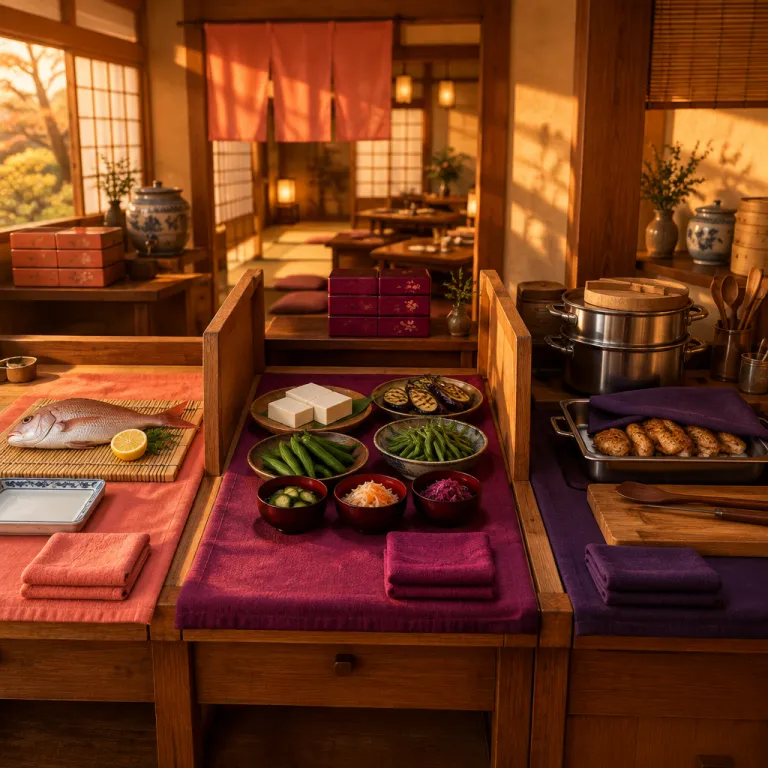
Reading a ryokan menu when faith shapes every bite
For many muslim travelers, the dream of a traditional Japanese stay collides with a quiet anxiety about what will actually arrive on the kaiseki tray. The core tension behind any halal kosher ryokan japan dietary request is that classic Japanese food assumes local guests, not global travelers with halal, kosher or Jain frameworks. When you add vegan, vegetarian and gluten free expectations to the mix, the ryokan kitchen becomes a negotiation between centuries of craft and very modern dietary maps.
In Japan, even dishes that look meat free often hide pork stock, fish flakes or a splash of sauce alcohol in the soy sauce. That is why muslim friendly promises on booking pages vary wildly, and why a serious japan guide for dietary faith must distinguish between fully halal certified operations and ryokan that simply remove visible meat or alcohol. The same nuance matters for vegan vegetarian guests, because animal products such as bonito flakes or dashi quietly underpin much traditional Japanese cooking.
Luxury ryokan in Tokyo, Kyoto and Osaka now receive detailed requests from muslim travelers, observant Jewish guests and Jain visitors months before arrival. Some properties have invested in halal food supply chains and separate utensils, while others offer only a simplified vegetarian vegan menu that still uses standard soy sauce or mirin. When you evaluate any ryokan, you are not just choosing a room with a view ; you are choosing how far that kitchen can stretch without breaking its own traditional Japanese identity.
Halal in the ryokan world: certified, muslim friendly, or just meat free
Halal in Japan is not a single standard, and that matters the moment you book a ryokan. At one end of the spectrum you find fully halal certified kitchens, usually in larger properties near Tokyo or Osaka that serve groups of muslim travelers and can guarantee halal food with documented supply chains. At the other end, small countryside ryokan quietly offer meat free or fish based menus and label them muslim friendly, even when soy sauce with alcohol or shared fryers remain in daily use.
For a solo explorer planning to travel Japan, the key question is not whether the ryokan is friendly, but how that friendliness is implemented plate by plate. Some muslim friendly ryokan in Kyoto or Nara will prepare halal food using separate knives and cutting boards, yet still cook in a shared kitchen where alcohol and pork are present. Others will serve vegetarian vegan shojin ryori inspired meals, which avoid meat and fish but may still rely on traditional Japanese seasonings that are not aligned with strict japan halal expectations.
If you are booking alone and want to understand what actually changes when you stay as a solo muslim guest, read this detailed guide to what shifts when you reserve a room for one. Then write to the ryokan in clear English and simple Japanese, asking whether they can provide halal certified meat, alcohol free soy sauce and a prayer space in or near your room. Repeat those questions for breakfast and dinner, because some ryokan only adjust one meal and keep the other aligned with their usual Japanese food rhythm.
Kosher at the ryokan: what is realistic, what is not
Kosher observance inside a traditional Japanese ryokan is far more complex than halal, because kashrut touches not only meat and alcohol but also equipment, timing and supervision. Most ryokan kitchens in Japan handle shellfish, pork and mixed meat daily, and their lacquered trays, knives and pots are not separated by category. For observant Jewish travelers, the honest answer is that a fully kosher ryokan experience almost never exists, even in major cities such as Tokyo or Osaka.
What some high end ryokan can offer is a practical compromise built around sealed kosher meals, vegetarian vegan trays and careful control of sauce and seasoning. Guests bring or arrange prepackaged kosher food, while the ryokan provides rice, fresh fruit, tea and sometimes simple gluten free items that do not conflict with kashrut. In Kyoto, a few properties used to working with embassies or business delegations will heat double wrapped kosher meals in a dedicated pot, but they will be transparent that the wider kitchen remains non kosher.
If you keep kosher and still want the full tatami, futon and onsen rhythm, treat the ryokan as your lodging and atmosphere, not your primary food source. Use a detailed japan guide to map kosher friendly restaurants in the nearest city, then coordinate lunch there and keep dinner at the ryokan very minimal and vegetarian. Families considering a stay should also read this honest framework on how ryokan work with children, because balancing kids, kashrut and multi course Japanese dinners in a quiet dining room can be more stressful than serene.
Jain, vegan, vegetarian and shojin ryori: where philosophies overlap
Jain dietary practice, with its avoidance of root vegetables, onion and garlic, is the strictest framework most ryokan will ever encounter. Traditional Japanese temple cuisine, known as shojin ryori, is often presented as the answer for vegetarian and vegan guests, yet it does not automatically align with Jain rules. Many shojin ryori menus in Kyoto and Koyasan use root vegetables and strong allium flavors, even when they are entirely free from meat and fish.
For vegetarian travelers who are not Jain, shojin ryori can be a beautiful bridge between faith, ethics and traditional Japanese aesthetics. Several ryokan near temple districts now offer a vegetarian vegan course inspired by this cuisine, using seasonal vegetables, tofu and sesame in place of meat or fish. These menus are usually alcohol free in the food itself, but soy sauce with a small amount of alcohol may still appear, so guests who avoid alcohol completely should ask about sauce ingredients in detail.
Jain guests need a different level of precision, which only a handful of ryokan kitchens in Japan can realistically provide. The most workable strategy is often to request a very simple gluten free and onion free vegetarian menu, then supplement with packaged Jain food brought from home. When you plan to travel Japan across multiple regions, use a japan guide that lists friendly restaurants and ryokan willing to adapt, and always send your full Jain, vegan or vegetarian list in writing at least two weeks before arrival.
The advance notice window: how to brief a ryokan kitchen
Ryokan kitchens are built around fixed seasonal menus, not last minute improvisation, which is why advance notice is everything for halal kosher ryokan japan dietary needs. Many luxury properties in Tokyo, Kyoto and Osaka now state clearly that they require 7 to 14 days notice for halal food, vegetarian vegan menus or gluten free adjustments. Without that lead time, the chef simply cannot source halal certified meat, alcohol free soy sauce or alternative sauces that avoid animal products.
When you book, send one concise document that explains whether you are muslim, Jewish, Jain, vegan, vegetarian or simply avoiding certain ingredients. List pork, meat, fish, shellfish, alcohol, sauce alcohol, soy sauce, eggs, dairy and gluten separately, and indicate whether cross contact is acceptable or not. This level of clarity helps the ryokan decide whether they can offer a muslim friendly menu, a fully halal food experience, a vegan vegetarian tray or only a basic meat free option.
Solo travelers often underestimate how much planning a multi course kaiseki meal requires behind the scenes. A chef designing a traditional Japanese dinner for muslim travelers must rethink the dashi stock, the grilled course, the hot pot and even the dessert if gelatin is off the table. If you are flexible, say so ; if you are not, be explicit, because a polite refusal from the ryokan before you travel Japan is far better than a compromised meal after you arrive.
Language, written cards and the gap between promise and plate
The language barrier is where many halal, kosher and Jain plans quietly unravel, especially outside Tokyo and Osaka. Front desk staff may understand the word halal or vegetarian, but the nuance between halal certified, muslim friendly and simply meat free can vanish between reception and the kitchen. That is why written cards in Japanese, listing your restrictions on meat, alcohol, animal products and gluten free needs, usually outperform any verbal request.
Ask the ryokan by email whether they can provide such a card, or prepare your own with help from a japan guide or local muslim friendly community. Include clear lines such as no pork, no meat, no fish, no alcohol in food or sauce, and no soy sauce containing alcohol, then carry several copies to show at ryokan and restaurants. Muslim travelers who pray regularly can also request a quiet prayer space, which some ryokan will arrange in a meeting room or unused tatami salon, even if they do not advertise this service publicly.
The honest gap in this field is the difference between accommodation and transformation. A ryokan can modify its menu, remove obvious alcohol and meat, and point you toward halal restaurants or friendly restaurants in town, yet still operate a kitchen that is not fully japan halal or kosher. For a deeper sense of how properties balance authenticity and adaptation, read this analysis of when cultural programming justifies an extra night, then apply the same critical lens to how they talk about food.
Choosing where to stay: city versus countryside, onsen versus certainty
Location is the quiet variable that shapes every halal kosher ryokan japan dietary decision. In central Tokyo, Osaka and Kyoto, access to halal restaurants, vegan vegetarian cafés and specialist supermarkets makes it easier to keep strict faith based diets while still enjoying a traditional Japanese stay. In remote onsen towns, the same ryokan charm comes with fewer external restaurants and almost total dependence on the in house kitchen.
For muslim travelers who want both onsen and certainty, the best time to visit is often when you can spend at least one night in a major city before or after a countryside stay. Use that urban base to enjoy a fully halal restaurant, restock packaged halal food and confirm details with your next ryokan by phone or email. Some guests choose a pattern of city ryokan with strong dietary support, followed by one night in a rural property where they accept a simpler vegetarian vegan or gluten free tray.
Families and solo explorers face slightly different trade offs when they travel Japan with faith based diets. A solo muslim guest may be comfortable skipping dinner and relying on snacks, while a family with children needs reliable hot food every evening. Think of your dietary framework as one more axis in the classic ryokan decision tree, alongside budget, onsen quality and how traditional Japanese you want the experience to feel.
Key figures on faith based dining in Japanese hospitality
- Japan National Tourism Organization has reported a steady rise in inbound muslim travelers, which has encouraged more hotels and ryokan in Tokyo and Osaka to experiment with halal food options and muslim friendly services.
- Industry surveys from Japanese hospitality associations indicate that only a small minority of traditional inns offer fully halal certified kitchens, while a larger group provides partial accommodation such as meat free or alcohol free menus on request.
- Data from tourism boards in Kyoto and other major destinations show growing promotion of vegan, vegetarian and shojin ryori restaurants, reflecting broader demand for plant based dining among international travelers.
- Several regional governments in Japan now publish online japan guide style lists of halal restaurants and friendly restaurants, helping visitors map where faith aligned meals are realistic before they book rural ryokan stays.
FAQ: halal, kosher and Jain dining at Japanese ryokan
Can a traditional Japanese ryokan really provide fully halal food ?
A small number of ryokan, mainly in or near major cities, can provide fully halal food using halal certified ingredients and separate utensils. Many more offer muslim friendly menus that avoid pork and alcohol but still use shared kitchens or standard soy sauce. Always ask for written confirmation of what halal or muslim friendly means in that specific property.
Is it possible to keep kosher while staying at a ryokan in Japan ?
Maintaining full kashrut inside a ryokan kitchen that handles pork and shellfish daily is usually not feasible. Some high end properties will heat sealed kosher meals and provide simple vegetarian sides such as rice and fruit. Most observant Jewish travelers treat the ryokan as accommodation only and rely on external kosher food sources.
How should Jain travelers brief a ryokan about their dietary needs ?
Jain guests should send a detailed written list explaining the avoidance of root vegetables, onion, garlic, eggs and animal products. It helps to request a very simple vegetarian vegan menu, then clarify which vegetables are acceptable and whether gluten free grains are preferred. Because this framework is unfamiliar in Japan, advance notice of at least two weeks is essential.
What is the best time to request dietary accommodations from a ryokan ?
The best time to raise halal, kosher, Jain, vegan or vegetarian needs is at the moment of booking, not at check in. Most ryokan require 7 to 14 days to source halal certified meat, adjust sauces and plan alternative dishes. Last minute requests are often declined or only partially met, especially in smaller countryside properties.
Do ryokan provide prayer space for muslim travelers ?
Some ryokan, particularly in Tokyo, Osaka and other major destinations, will quietly arrange a small prayer space if asked in advance. This might be a corner of a meeting room, an unused tatami salon or simply guidance on the qibla direction in your room. Because it is rarely advertised, you need to request it explicitly when you confirm your reservation.